

The 2026 agent market landscape
The global AI agents market is undergoing a structural shift from experimental chat interfaces to autonomous action engines. In 2025, the market size stood at USD 7.92 billion. Forecasts indicate a jump to USD 11.55 billion in 2026, with an expected compound annual growth rate (CAGR) of 43.57% through 2035, potentially reaching USD 294.66 billion by the end of the decade Precedence Research.
This growth is not driven by hype alone but by enterprise adoption of systems that can execute complex workflows. Businesses are moving beyond simple response models to deploy agents that decide, act, and integrate directly into operational pipelines. This transition marks the difference between conversational AI and agentic AI, where the value lies in the outcome rather than the interaction.
For investors and enterprise leaders, the financial implications are significant. The rapid expansion requires robust infrastructure and security protocols. The market is consolidating around providers who can offer reliable, secure, and scalable agent frameworks. The following widget provides real-time context on the performance of a major AI infrastructure provider, reflecting the market's underlying momentum.
Charting the autonomous workflow trend
The enterprise shift from passive chat interfaces to autonomous agents is no longer a speculative concept but a measurable market force. As of 2025, the global AI agents market size stood at USD 7.92 billion, with projections indicating a rise to USD 11.55 billion in 2026. This growth trajectory reflects a fundamental change in how organizations deploy artificial intelligence: moving from tools that respond to prompts toward systems that orchestrate complex, end-to-end workflows semi-autonomously [Google Cloud].
This transition is driven by the urgent need for operational efficiency. Enterprises are increasingly prioritizing agents that can execute tasks rather than just analyze data. According to Databricks' 2026 State of AI Agents report, the most common use cases are shifting toward database transformation and high-priority execution tasks. This indicates that businesses are embedding AI directly into their core operational pipelines, reducing latency and human error in critical processes.
The financial implications of this shift are significant. The market is predicted to expand at a compound annual growth rate (CAGR) of 43.57% from 2026 to 2035, potentially reaching USD 294.66 billion by the end of the decade [Precedence Research]. This rapid expansion suggests that AI agents will become a standard infrastructure component, similar to cloud computing or enterprise resource planning systems, fundamentally altering the cost structure of enterprise operations.
To understand the broader market context, it is useful to look at the performance of AI-focused exchange-traded funds (ETFs), which often reflect investor sentiment toward autonomous technology sectors.
Top enterprise agent use cases in 2026
Autonomous AI agents are shifting from experimental pilots to core operational infrastructure. The 2026 State of AI Agents report from Databricks highlights that enterprises are prioritizing use cases where agents can execute multi-step workflows with minimal human intervention. This shift is driven by the need for measurable ROI, specifically in reducing operational latency and minimizing human error in high-volume processes.
The market for these systems is expanding rapidly. Precedence Research projects the global AI agents market will grow from $11.55 billion in 2026 to nearly $295 billion by 2035. This growth is not merely about automation; it is about replacing brittle, rule-based scripts with adaptive agents that can handle exceptions and make contextual decisions. For finance and enterprise leaders, the focus is on reliability and security, ensuring that agents operate within strict governance frameworks.
Intelligent document processing
Traditional document processing relies on manual data entry or rigid optical character recognition (OCR) that fails on unstructured formats. In 2026, AI agents act as autonomous data engineers. They ingest invoices, contracts, and reports, extract relevant entities, validate them against internal databases, and route them for approval. This reduces processing time from days to minutes and significantly lowers the cost per transaction.
| Workflow Stage | Traditional Manual Process | AI Agent Autonomous Process |
|---|---|---|
| Ingestion | Physical scan or email attachment | Automated API pull from vendor portals |
| Extraction | Manual data entry by staff | LLM-based entity extraction and validation |
| Verification | Cross-referencing via separate systems | Real-time database lookup and anomaly detection |
| Approval | Email chains and manual routing | Auto-approval for low-risk items; flagging exceptions |
Autonomous financial reconciliation
Financial teams spend significant hours reconciling transactions across disparate banking platforms and ERP systems. AI agents streamline this by continuously monitoring ledgers. When discrepancies arise, the agent investigates the root cause, suggests corrections, and executes the reconciliation if it falls within predefined risk thresholds. This reduces the month-end close cycle and improves cash flow visibility.
Supply chain exception handling
Supply chain disruptions are common, but reacting to them is often slow. AI agents monitor logistics data in real-time. If a shipment is delayed, the agent can automatically trigger contingency plans: rerouting inventory, notifying stakeholders, and updating order statuses. This proactive approach minimizes downtime and maintains service level agreements without requiring constant human oversight.
Customer support resolution
Beyond simple chatbots, enterprise agents now handle complex support tickets. They access customer history, diagnose issues, and execute solutions such as processing refunds or scheduling repairs. By resolving tier-1 and tier-2 issues autonomously, companies reduce ticket volume and allow human agents to focus on high-value, complex customer interactions.
Building production-ready agent architecture
Moving from experimental chatbots to autonomous enterprise agents requires a fundamental shift in engineering rigor. The stakes are high: Gartner predicts that 40% of AI agent projects will fail by 2027, often due to poor architectural foundations rather than model capability [[src-serp-7]]. To avoid this fate, organizations must prioritize reliability, security, and scalability in their design.
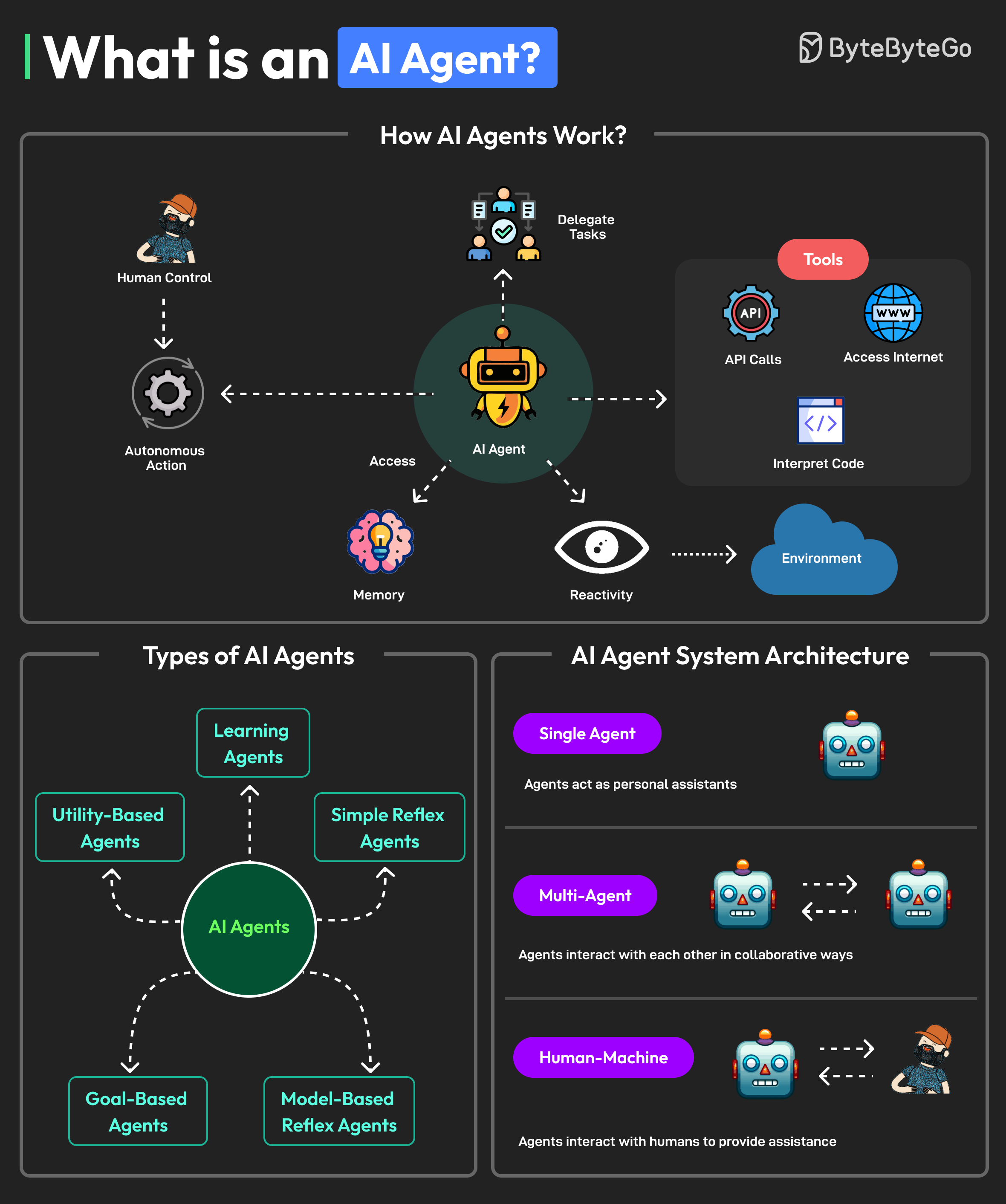
The core of a production-ready system relies on three interconnected pillars: retrieval, standardization, and guardrails. Retrieval-Augmented Generation (RAG) ensures agents ground their actions in verified enterprise data, reducing hallucination risks. The Model Context Protocol (MCP) and Agent-to-Agent (A2A) standards provide the necessary interoperability, allowing agents to communicate with internal tools and external services securely. Without these standards, agents remain isolated silos that cannot execute complex, multi-step workflows.
Security and guardrails form the final layer of defense. Agents acting on behalf of the enterprise must operate within strict boundaries to prevent data leaks or unauthorized actions. This involves implementing real-time monitoring, input/output filtering, and audit trails. As noted in the LangChain State of Agent Engineering report, the industry focus has shifted from "whether" to build agents to "how" to deploy them reliably at scale [[src-serp-8]]. This requires treating agent infrastructure with the same operational excellence as traditional financial trading systems, where latency, accuracy, and compliance are non-negotiable.
The financial impact of getting this right is significant. With the global AI agents market projected to grow from $11.55 billion in 2026 to nearly $295 billion by 2035 [[src-serp-10]], early adopters who build robust architectures will capture disproportionate value. Conversely, organizations that skip architectural rigor risk significant capital waste and operational disruption. The difference between a failed pilot and a scalable asset lies in the foundation.
Strategic checklist for 2026 adoption
The shift from chat-based assistants to autonomous agents requires a disciplined audit of existing workflows. According to the 2026 State of AI Agents report from Databricks, enterprises that successfully deploy agents prioritize data integrity and security over feature breadth. Leaders must treat agent implementation as a risk management exercise, ensuring that automated actions are bounded by strict governance protocols.
Use the following framework to evaluate readiness before committing capital to agent infrastructure.
Agents require structured, high-fidelity data to execute tasks reliably. Before deployment, verify that your data lakes and warehouses are clean, labeled, and accessible via secure APIs. Poor data quality leads to hallucinated actions, which can cause financial or operational damage in enterprise settings.

Autonomous agents need permission to act, but those permissions must be granular. Implement role-based access control (RBAC) and ensure that agents can only interact with systems relevant to their specific task. Google Cloud notes that the "agent leap" introduces new attack surfaces; therefore, security reviews must precede any public-facing or cross-departmental integration.
Move beyond engagement metrics to track operational efficiency. Define clear success criteria, such as reduction in manual touchpoints, error rate decrease, or time-to-resolution. Without these benchmarks, it is difficult to justify the infrastructure costs associated with training and maintaining autonomous agent systems.
For high-stakes decisions, retain human approval gates. Agents should handle routine, low-risk tasks autonomously, while escalating complex or ambiguous scenarios to human operators. This hybrid approach mitigates risk while allowing the organization to scale agent usage gradually.

Deploy agents in controlled environments first. Monitor performance logs for drift or unexpected behavior, and refine the agent's instructions based on real-world feedback. Continuous monitoring ensures that the agent adapts to changing business conditions without requiring a full system overhaul.
The global AI agents market is projected to grow from USD 11.55 billion in 2026 to USD 294.66 billion by 2035, according to Precedence Research. This rapid expansion underscores the importance of a structured adoption strategy. Companies that follow this checklist are better positioned to capture value while avoiding the pitfalls of premature or poorly governed deployment.
Market size and growth projections
The global AI agents market is expanding rapidly as enterprises shift from experimental chat interfaces to autonomous action systems. Precedence Research valued the market at $7.92 billion in 2025 and projects it will reach $11.55 billion in 2026, growing at a compound annual growth rate (CAGR) of 43.57% through 2035. This trajectory reflects a structural shift where organizations prioritize systems that execute tasks rather than merely responding to queries.
This growth is driven by the need for operational efficiency and the maturation of multi-agent architectures. As reliability and security protocols improve, the financial impact of deploying these agents becomes increasingly tangible for enterprise leaders.
No comments yet. Be the first to share your thoughts!