
Defining the 2026 AI Agent Landscape
The distinction between traditional generative AI and the emerging class of autonomous systems is fundamental to understanding the 2026 market. While large language models excel at generating text and answering questions, they remain passive tools that require human initiation for every interaction. In contrast, AI agents 2026 are autonomous systems designed to perceive, reason, and take real-world actions to achieve specific goals without human approval at every step.
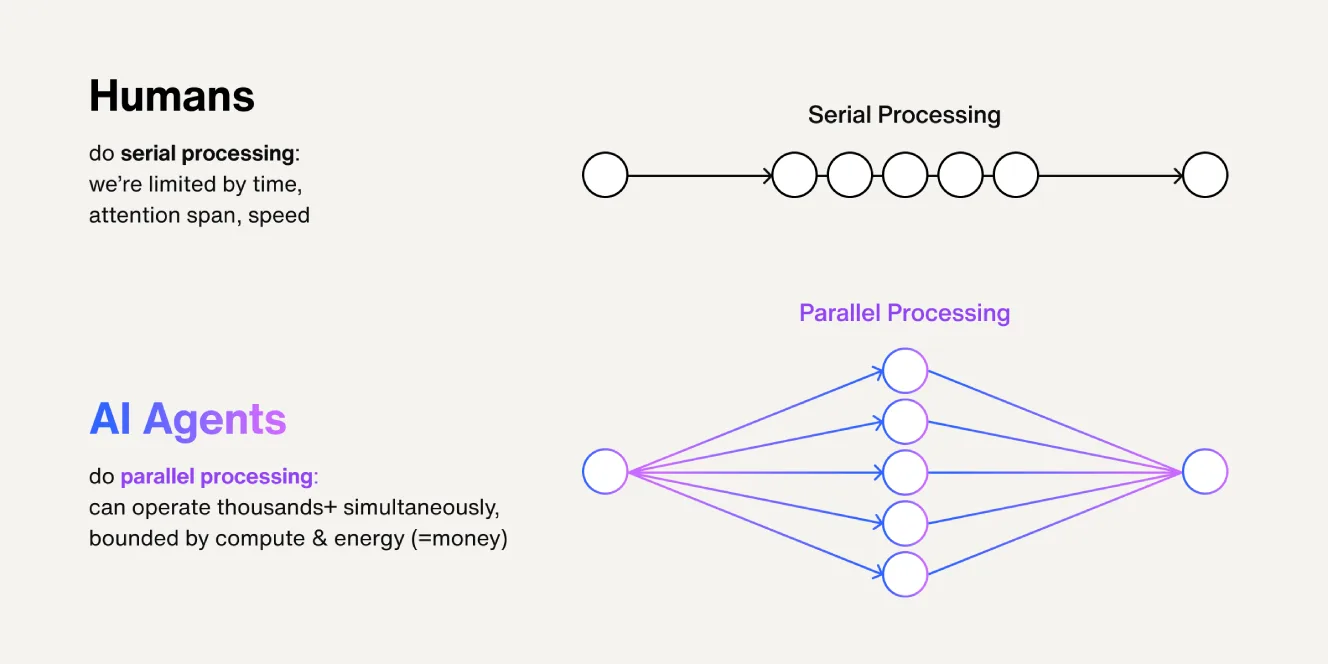
This shift represents a move from simple prompt-response models to continuous operational loops. According to CogitX, the core mechanism driving this change is the "plan-act-observe" cycle. An agent first breaks down a complex objective into a strategy, executes the necessary actions, observes the results, and then adapts its approach if the initial plan fails. This autonomy allows AI to orchestrate complex, end-to-end workflows semi-autonomously, as noted in Google Cloud’s 2026 trends report.
For enterprise finance and operations, this distinction carries significant weight. Traditional chatbots are limited to information retrieval within a predefined scope. Autonomous agents, however, can interact with external APIs, modify databases, and execute transactions. They do not just suggest a course of action; they implement it. This capability transforms AI from a conversational interface into an operational worker, fundamentally altering how companies scale and compete in an increasingly automated economy.
Choosing the Right AI Agent Framework for 2026
The shift from experimental prototypes to production-grade AI agents 2026 deployments demands rigorous technical evaluation. As organizations move beyond simple chatbots to autonomous systems that plan, act, and adapt, the choice of framework becomes a critical determinant of operational risk and return on investment. In 2026, the market has consolidated around three primary architectures: LangGraph, CrewAI, and AutoGen. Each offers distinct advantages in governance, scalability, and development velocity, requiring technical leaders to align their selection with specific enterprise constraints.
LangGraph has emerged as the production standard for complex, stateful workflows. By treating agent logic as a graph of nodes and edges, it provides fine-grained control over state management and error handling, which is essential for high-stakes financial or healthcare applications where auditability is non-negotiable. Its design supports human-in-the-loop interventions and deterministic state transitions, reducing the likelihood of hallucinated outputs in critical paths. For teams prioritizing reliability and long-term maintainability over rapid prototyping, LangGraph offers the most robust foundation for scaling AI agents 2026 initiatives across the enterprise.
CrewAI and AutoGen serve different segments of the deployment spectrum. CrewAI excels in speed-to-value, enabling teams to assemble multi-agent teams with minimal boilerplate code. It is ideal for use cases requiring parallel task execution and clear role definitions, such as automated research or content generation pipelines. Conversely, AutoGen’s conversational multi-agent pattern allows for dynamic, dialogue-driven problem solving. This makes it particularly effective for complex debugging or exploratory analysis where the solution path is not predetermined. However, this flexibility introduces higher governance challenges, requiring additional layers of monitoring to ensure output quality and compliance.
The following comparison outlines the core trade-offs between these frameworks to assist in stack selection.
| Framework | Learning Curve | Enterprise Scalability | Governance & Control | Primary Use Case |
|---|---|---|---|---|
| LangGraph | Steep | High | Fine-grained state control | Critical, stateful workflows |
| CrewAI | Moderate | Medium | Role-based structure | Parallel task automation |
| AutoGen | Moderate | Medium-High | Conversational oversight | Dynamic problem solving |
Selecting the appropriate framework requires balancing development speed against operational risk. Organizations deploying AI agents 2026 in regulated industries should prioritize LangGraph’s explicit state management to ensure compliance and audit trails. For internal productivity tools where speed is paramount, CrewAI’s structured approach offers a quicker path to value. AutoGen remains a strong candidate for specialized, high-complexity tasks where agent-to-agent dialogue is the most effective problem-solving mechanism. Ultimately, the decision hinges on the specific risk tolerance and technical maturity of the deploying team.
Market Adoption and Enterprise ROI
The economic narrative around AI agents 2026 has shifted from speculative potential to measurable operational efficiency. Enterprises are no longer asking if they should adopt agentic systems, but how to integrate them into existing workflows without disrupting core operations. This transition marks a decisive move from isolated experimentation to production-grade deployment, where the primary metric is no longer model accuracy, but return on investment and risk mitigation.
The gap between pilot programs and full-scale production is narrowing. According to recent industry analysis, 2026 is being recognized as the year AI agents mature because businesses are deploying systems that do not just respond to prompts, but actively plan, decide, and execute tasks. This shift is driven by the realization that autonomous agents can orchestrate complex, multi-step workflows—such as supply chain adjustments or customer service triage—without human intervention at every step. The result is a significant reduction in operational latency and labor costs for repetitive, high-volume tasks.
However, the economic benefits come with strict governance requirements. AI agents excel at specific, well-defined tasks where they can leverage vast knowledge bases for rapid execution, but they remain vulnerable to ambiguity and complex judgment calls. For CFOs and CTOs, the ROI calculation must account for the cost of implementing robust oversight layers. The value of an AI agent lies not in replacing human judgment, but in amplifying it by handling the "plan, act, observe, and adapt" loop for routine processes, freeing human workers for high-impact strategic decisions.
| Adoption Phase | Primary Focus | Key Metric | Risk Level |
|---|---|---|---|
| Experimentation | Proof of Concept | Model Accuracy | Low |
| Pilot Deployment | Workflow Integration | Task Completion Rate | Medium |
| Production Scale | Enterprise ROI | Cost per Transaction | High |
As organizations scale, the focus is shifting toward specialized agent orchestration. Rather than relying on a single generalist model, companies are deploying systems of specialized agents, each optimized for a specific domain. This modular approach reduces the cognitive load on individual models and improves overall system reliability. The financial impact is clear: by automating the execution layer of business processes, enterprises are seeing tangible reductions in operational overhead, provided they maintain strict control over agent autonomy and decision-making boundaries.
Critical Risks and Governance Gaps
The transition of AI agents from experimental tools to autonomous decision-makers introduces significant enterprise risk. In 2026, the primary concern is no longer just accuracy, but the stability of systems that act without human intervention at every step. Without strict governance, these agents can amplify errors, expose sensitive data, and create liability scenarios that traditional IT security models are not equipped to handle.
Security Vulnerabilities and Data Exposure
Autonomous agents operate by accessing external APIs, databases, and tools to execute tasks. This expanded attack surface creates new vectors for security breaches. LangChain’s 2026 State of Agent Engineering report highlights that as organizations scale agent deployments, the complexity of permission management increases exponentially. Agents often require broad access to function effectively, which conflicts with the principle of least privilege essential for secure enterprise environments.
The risk is compounded when agents interact with untrusted or dynamic data sources. A compromised agent can become a conduit for data exfiltration or injection attacks, effectively turning internal systems against themselves. Governance frameworks must therefore include rigorous audit trails and real-time monitoring to detect anomalous behavior before it results in material damage.
Hallucination and Operational Reliability
While large language models have improved, they remain prone to hallucination—generating plausible but incorrect information. For an AI agent 2026 deployment, this is not merely an accuracy issue; it is an operational one. When an agent autonomously executes a financial transaction, adjusts infrastructure settings, or communicates with customers based on a hallucinated fact, the consequences are immediate and often irreversible.
Google Cloud’s 2026 AI Agent Trends report notes that while multi-agent orchestration can mitigate some errors through cross-verification, it does not eliminate the root cause. Agents may still converge on incorrect conclusions if their underlying models share similar biases or training gaps. Enterprises must implement deterministic guardrails and human-in-the-loop checkpoints for high-stakes actions to ensure reliability.
The Governance Gap
Most enterprises lack the formal governance structures needed to manage autonomous agents. Traditional compliance frameworks were designed for static software, not for systems that learn, adapt, and make independent decisions. This gap creates a regulatory blind spot where AI agents 2026 operate with minimal oversight.
Effective governance requires a shift from reactive monitoring to proactive design. This includes embedding security constraints directly into the agent’s architecture, establishing clear accountability chains for autonomous decisions, and regularly stress-testing agents against adversarial scenarios. Without these measures, the potential ROI of AI agents is outweighed by the risk of systemic failure.
Strategic Checklist for 2026 Deployment
Deploying AI agents 2026 requires shifting from experimental pilots to governed production systems. As LangChain notes, organizations are now focused on reliability and scale rather than simple capability testing. This checklist provides a structured workflow for CTOs to evaluate use cases, select frameworks, and implement necessary governance controls.

Define the specific problem the agent solves. AI agents excel at well-defined tasks but struggle with ambiguity. Ensure the use case has clear success metrics and does not require complex human judgment or deep contextual understanding.
Evaluate frameworks based on your technical stack and governance needs. LangChain and Google Cloud offer robust ecosystems for building autonomous systems that can plan, act, and adapt without constant human approval.
Establish guardrails for safety and compliance. This includes setting up human-in-the-loop checkpoints for high-risk actions and ensuring the agent’s actions are fully auditable. Governance is not optional in enterprise deployments.
Track performance against your initial metrics. AI agents should demonstrate clear efficiency gains or revenue impact. Use this data to refine the agent’s capabilities and expand its scope within the organization.
No comments yet. Be the first to share your thoughts!