
Defining the 2026 AI Agent Landscape
By 2026, the distinction between a generative AI wrapper and an operational AI agent has become the primary filter for enterprise procurement. Earlier iterations of large language models were designed to generate text or code based on prompts. In contrast, an AI agent possesses the ability to plan, execute, and iterate on complex tasks across multiple systems without constant human intervention. This shift moves AI from a passive assistant to an active participant in business workflows.
The core differentiator lies in agency. A standard LLM provides information; an AI agent takes action. This involves chaining together reasoning steps, calling external APIs, and verifying outcomes before closing a loop. As noted by industry analysts, 2026 marks the year AI begins operating inside real workflows, making the understanding of planning and execution capabilities essential for any organization. The technology is no longer about novelty; it is about operational reliability.
Despite the enthusiasm, enterprises must ground their expectations in reality. Current AI agents remain brittle and heavily dependent on human supervision. They are not autonomous employees capable of full independence. Instead, they function as sophisticated automation layers that require rigorous oversight, clear guardrails, and robust error-handling protocols. The value proposition in 2026 is not replacement, but augmentation of human-led processes with machine-driven execution.
top ai agent platforms for enterprise use
Selecting an AI agent platform requires aligning technical capabilities with existing infrastructure. The 2026 landscape is defined by operational reliability rather than autonomous novelty. Most enterprise deployments still require human supervision, making integration depth and security protocols the primary differentiators.
The following comparison evaluates leading platforms based on their suitability for specific enterprise workflows. This analysis draws from official documentation and industry reports to provide a clear view of each platform's strengths and constraints.
| Platform | Best Use Case | Pricing Model | Integration Depth |
|---|---|---|---|
| Microsoft Copilot Studio | Microsoft 365 Ecosystem | Per-user subscription | Native M365 connectivity |
| Databricks AI Agents | Data Science & Analytics | Usage-based compute | Deep lakehouse integration |
| IBM watsonx Orchestrate | Enterprise Governance | Enterprise license | Hybrid cloud deployment |
| n8n | Open Source Automation | Self-hosted free tier | Extensive API library |
Microsoft Copilot Studio remains the default choice for organizations deeply embedded in the Microsoft ecosystem. Its strength lies in seamless connectivity with Office 365 applications, allowing agents to operate within familiar interfaces like Teams and Outlook. This reduces friction for adoption but limits flexibility for non-Microsoft workflows.
Databricks AI Agents caters to data-intensive environments. By leveraging the Databricks Lakehouse Platform, these agents can process complex datasets without moving data to external systems. This approach is ideal for analytics-driven roles but requires significant data engineering expertise to configure effectively.
IBM watsonx Orchestrate emphasizes governance and security, making it suitable for regulated industries. It offers robust hybrid cloud deployment options and strict access controls. While it provides strong compliance features, the setup process is more complex compared to consumer-friendly alternatives.
n8n serves as a strong open-source alternative for teams requiring full control over their automation logic. Its self-hosted free tier allows for extensive customization without licensing fees. However, maintaining security and scalability in a self-hosted environment requires dedicated IT resources.
Key trends driving 2026 enterprise adoption
Enterprise adoption of AI agents in 2026 is shifting from experimental pilots to operational integration, driven by the move toward multi-agent systems and hybrid data feeds. While the market sees significant hype, the underlying driver is practical: organizations are seeking to cut costs and boost efficiency by deploying AI that augments existing workflows rather than replacing human roles entirely.
Multi-agent systems for complex workflows
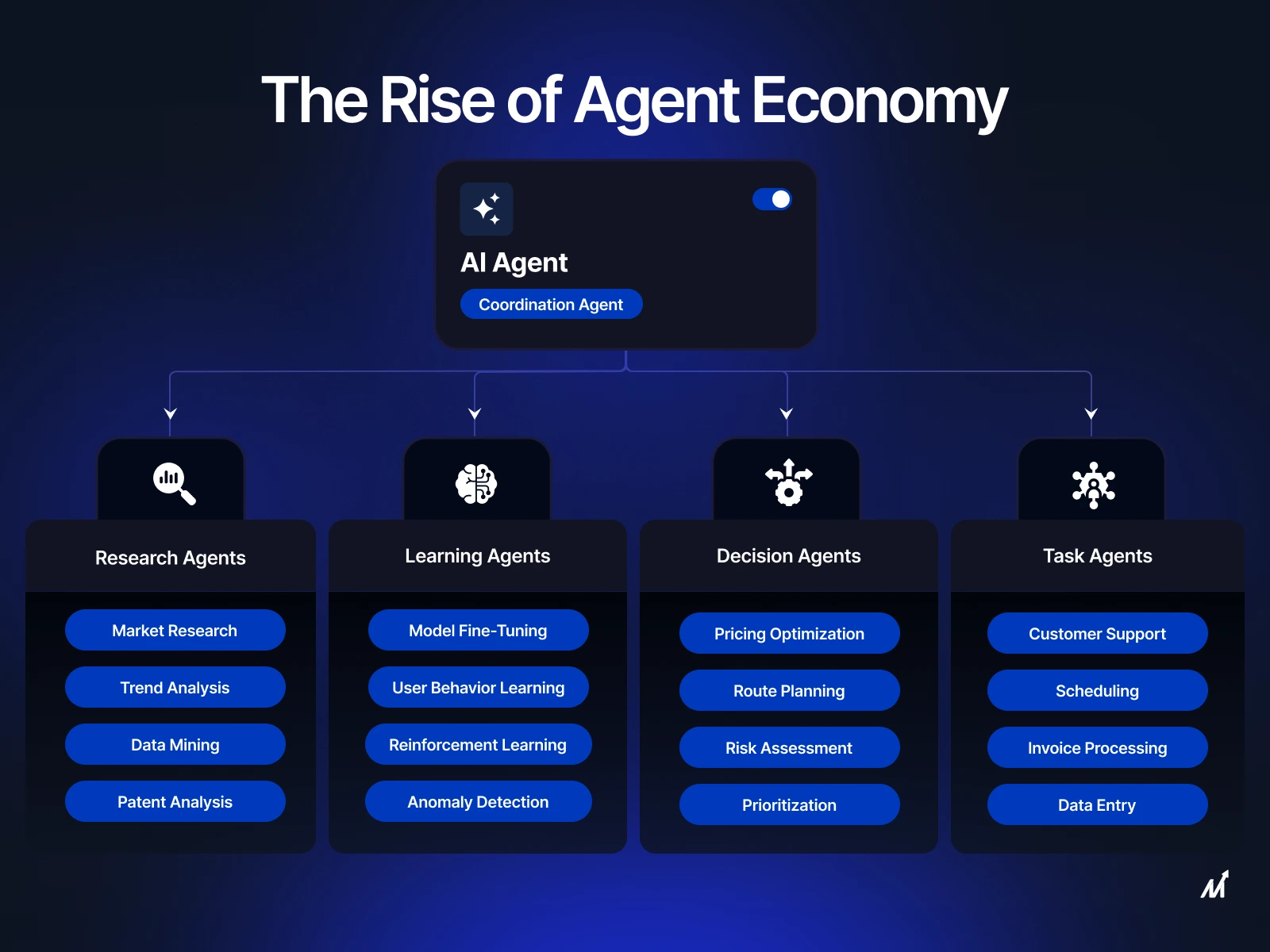
The most significant operational trend is the transition from single, isolated agents to multi-agent systems. In 2026, enterprises are deploying specialized agents that collaborate to handle complex, multi-step processes. This architecture allows for better error handling and specialization, as one agent can manage data retrieval while another handles execution or validation.
This shift addresses the brittleness of earlier single-agent models. By distributing tasks across a network of agents, companies can maintain higher reliability in high-stakes environments. The focus is on creating a cohesive workflow where agents communicate and delegate tasks, mirroring how human teams operate. This approach reduces the risk of failure in critical business processes.
Hybrid data feeds for real-time accuracy
Another critical trend is the integration of hybrid data feeds. Enterprises are moving beyond static training data to systems that ingest real-time information from internal databases, external APIs, and live market sources. This ensures that AI agents operate with current, accurate information, which is essential for tasks like financial analysis, supply chain management, and customer support.
Google Cloud and other major providers emphasize that this real-time capability is what transforms AI from a passive tool into an active operational asset. By combining structured internal data with unstructured external feeds, enterprises can create agents that provide context-aware responses and actions. This hybrid approach reduces hallucinations and increases the reliability of AI-driven decisions.
Operational reality over hype
Despite the excitement, 2026 marks a year of operational reality. AI agents are not autonomous employees; they remain heavily dependent on human supervision and clear boundaries. The focus is on using AI to handle repetitive, data-intensive tasks, freeing up human workers for higher-value activities. This pragmatic approach ensures that AI adoption delivers measurable ROI without disrupting core business operations.
The trend is toward "agentic AI" that is reliable, secure, and integrated into existing enterprise infrastructure. Companies are prioritizing platforms that offer robust governance, audit trails, and seamless integration with legacy systems. This ensures that AI agents can be deployed at scale while maintaining compliance and security standards.
evaluating roi and operational risks
The 2026 landscape for AI agents is defined by a sharp contrast between executive optimism and operational reality. While these systems are increasingly visible in corporate strategy decks, their actual performance in production environments often falls short of autonomous promises. Industry analysis from 2026 indicates that despite significant advances in reasoning capabilities, these systems remain brittle and heavily dependent on human supervision. They are not yet reliable enough to function as independent employees without rigorous oversight.
This brittleness poses a direct threat to return on investment. When agents fail to execute complex, multi-step workflows correctly, the cost of correction often exceeds the efficiency gains. Reliability is not just a technical metric; it is a financial one. Enterprises must account for the labor required to monitor, validate, and intervene in agent-driven processes. Without this human-in-the-loop architecture, the risk of cascading errors in critical business operations remains high.
To manage these risks, leaders must shift their evaluation criteria. Success should not be measured by the agent's ability to operate without help, but by its ability to assist humans within defined constraints. This requires a disciplined approach to integration, where clear boundaries are set for agent autonomy. Only by acknowledging these limitations can organizations build sustainable, long-term value from AI agent deployments.
Selecting the right ai agent strategy
Enterprises approaching 2026 face a critical decision: build, buy, or integrate. The choice depends on data ownership, integration complexity, and long-term operational goals. According to Databricks' 2026 State of AI Agents report, organizations must align their strategy with existing data infrastructure to avoid costly silos.
Build for unique data advantages
Building custom agents is viable only when proprietary data or specialized workflows cannot be met by off-the-shelf solutions. This path requires significant engineering resources and ongoing maintenance. Companies with mature MLOps teams may find this approach necessary for competitive differentiation, but it carries high risk if internal talent is scarce.
Buy for speed and standardization
Purchasing established platforms accelerates deployment and reduces initial development costs. Vendors like Microsoft and Zapier offer robust ecosystems for common use cases. This strategy is ideal for organizations prioritizing quick time-to-value over deep customization. However, reliance on third-party providers can limit flexibility and increase long-term licensing fees.
Integrate for hybrid flexibility
Integration strategies combine best-of-breed tools with internal systems. This approach allows enterprises to leverage specialized agents for specific tasks while maintaining central control. It requires careful API management and security oversight. For many mid-sized companies, this hybrid model offers the best balance of agility and control.
Evaluate your existing data infrastructure. Ensure data is clean, accessible, and properly governed before selecting an agent strategy. Poor data quality undermines even the most advanced AI models.
Identify specific business problems that agents can solve. Prioritize high-impact, low-risk use cases for initial pilots. This helps demonstrate value and build internal confidence.
Compare platforms based on integration capabilities, security standards, and total cost of ownership. Look for vendors with strong enterprise support and clear roadmaps.
Establish clear policies for agent behavior, data privacy, and human oversight. Governance frameworks are essential for maintaining trust and compliance as agents become more autonomous.
| Strategy | Initial Cost | Control | Speed |
|---|---|---|---|
| Build | High | High | Slow |
| Buy | Low | Low | Fast |
| Integrate | Medium | Medium | Medium |
No comments yet. Be the first to share your thoughts!