
The Reality of AI Agents in 2026
The hype around autonomous AI agents has matured into a practical toolkit for small businesses. In 2026, these agents are no longer just chatbots that answer emails; they are systems that plan, execute, and verify multi-step workflows. The shift is from "what can it say?" to "what can it do?"
For small business owners, the value lies in handling repetitive, high-volume tasks without constant supervision. An agent might negotiate a vendor contract, reconcile invoices, or manage customer support tickets across channels. The key is reliability. A 2026 agent must handle edge cases without breaking the entire workflow, requiring robust error handling and human-in-the-loop checkpoints.
Choosing the right agent means looking beyond raw intelligence. You need a system that integrates with your existing stack—CRM, ERP, or accounting software—and respects your data privacy policies. The best agents in 2026 are those that act as reliable extensions of your team, not just novelty experiments.
Ai agents 2026 choices that change the plan
Choosing an autonomous agent in 2026 means balancing capability against control. The market has shifted from simple task automation to complex orchestration, where the primary risk is no longer just accuracy, but operational friction. Small businesses must evaluate agents based on how they integrate with existing workflows rather than raw intelligence scores.
The following comparison highlights the core tradeoffs between leading platforms. These factors determine whether an agent will streamline operations or create new management overhead.
| Agent | Cost Model | Autonomy Level | Integration Ease |
|---|---|---|---|
| OpenAI Operator | Per-token subscription | High (full browser control) | Moderate (API dependent) |
| Google Gemini | Tiered subscription | Medium (workspace-specific) | High (native G-Suite) |
| Anthropic Claude | Per-token usage | Medium (tool-use focused) | High (via API) |
| Microsoft Copilot | Enterprise license | Low-Medium (scaffolded) | Very High (365 native) |
OpenAI Operator offers the highest degree of autonomy, capable of navigating complex web interfaces independently. However, this power comes with higher costs and a steeper learning curve for error correction. It is best suited for businesses with dedicated technical resources to monitor and guide autonomous actions.
Google Gemini and Microsoft Copilot prioritize integration depth over raw autonomy. Gemini leverages existing Google Workspace data, reducing the need for complex API connections. Copilot embeds directly into Office 365, offering a familiar interface but restricted by Microsoft’s security scaffolding. These options reduce implementation time but may limit cross-platform flexibility.
Anthropic Claude sits in the middle, focusing on precise tool-use rather than broad exploration. Its cost model scales with usage, making it predictable for variable workloads. However, it requires more upfront configuration to define the specific tools and APIs it can access.
When evaluating these tradeoffs, consider the total cost of ownership. High autonomy often correlates with higher error rates, which can negate cost savings if manual review is required. For most small businesses, the "sweet spot" is an agent with medium autonomy and high native integration, minimizing both setup time and ongoing supervision.
How to Choose the Right AI Agent for Your Business
Picking an AI agent isn't about finding the most powerful model; it's about matching the agent's autonomy level to your team's tolerance for risk. In 2026, the market has shifted from simple chatbots to agents that can execute multi-step workflows. To make the right choice, evaluate each option against three practical constraints.

Start by identifying which tasks require human oversight and which can be fully autonomous. Simple tasks like email triage or basic data entry fit low-autonomy agents. Complex workflows involving financial transactions or customer negotiations require high-autonomy agents with strict guardrails. If a task involves more than three distinct steps or external system integrations, prioritize agents with proven reliability over novelty.

An agent is only as useful as its ability to connect with your existing tools. Check if the agent natively supports your CRM, ERP, or accounting software. In 2026, top-performing agents like OpenAI Operator and Google Gemini are valued less for their chat interfaces and more for their ability to act across multiple applications simultaneously. Avoid agents that require heavy custom coding to function within your current stack.
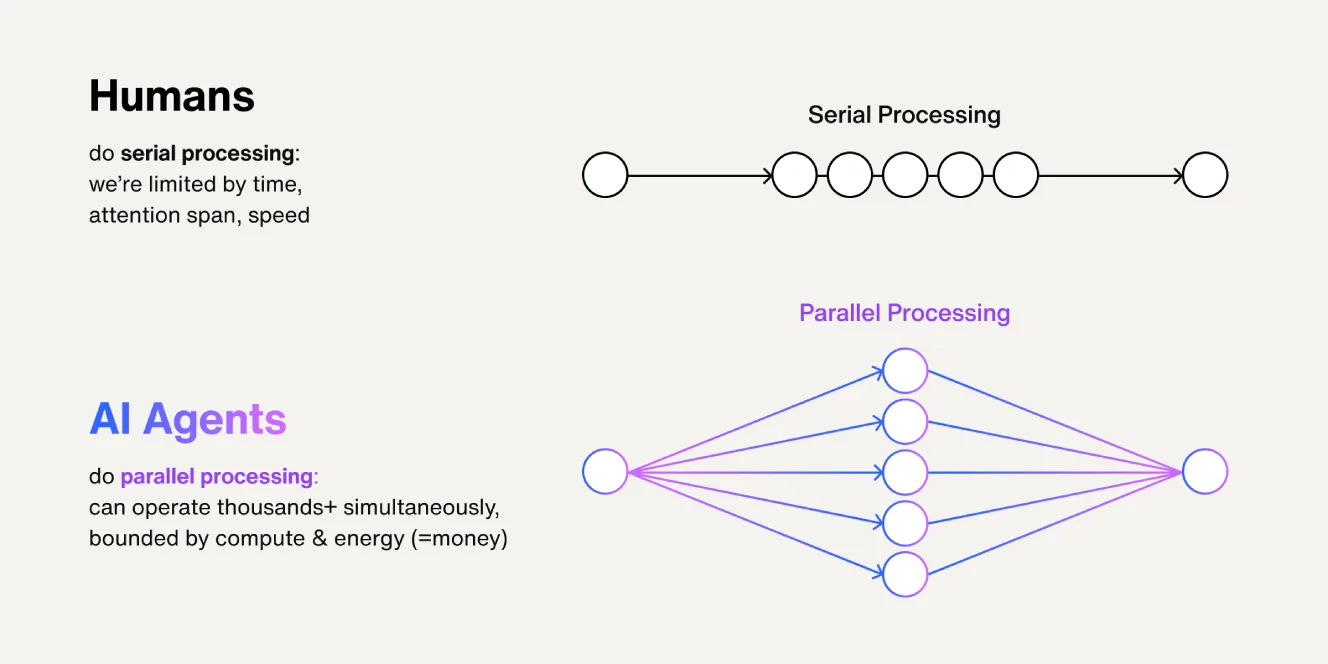
Before committing to a full rollout, run a two-week pilot with a single department. Define clear success metrics, such as time saved per task or error reduction rates. Monitor how the agent handles edge cases and unexpected inputs. This phase reveals whether the agent's decision-making aligns with your business standards without risking critical operations.
By focusing on workflow fit, integration depth, and controlled testing, you can select an AI agent that enhances productivity without introducing unnecessary risk. This structured approach ensures your investment delivers measurable returns in the evolving 2026 AI landscape.
The Trap of Overpromising
The 2026 AI agent market is crowded with claims of "autonomous" operation, but most tools still require significant human oversight. Small businesses often fall for marketing that suggests these agents can run completely on their own, leading to wasted subscription fees and operational bottlenecks. It is vital to distinguish between true autonomy and simple task automation.
Common Misleading Claims
Many vendors advertise "set-and-forget" capabilities. In reality, most agents need constant calibration. OpenAI Operator and Google Gemini, for instance, excel at specific tasks but struggle with complex, multi-step workflows without human intervention. Assuming otherwise can lead to errors in customer communication or data entry.
Weak Options to Avoid
Not all AI agents are built equal. Some platforms offer limited integrations, making them useless for businesses with existing tech stacks. Others lack robust security features, posing a risk to sensitive business data. Always check for API compatibility and data privacy compliance before committing.
The Reality of "Autonomous" Agents
True autonomy is rare. Most agents function best as collaborative tools, handling repetitive tasks while humans manage strategy and exception handling. Look for agents that provide clear transparency logs and easy override mechanisms. This ensures you maintain control while leveraging efficiency.
Ai agent 2026: what to check next
Small business owners are moving past the hype and looking for concrete answers on deployment, costs, and capabilities. Here are the most common questions about the 2026 AI agent economy.
No comments yet. Be the first to share your thoughts!