
What AI agents 2026 actually mean for your stack
The 2026 AI agent economy is no longer about chatbots that summarize meetings. It is about autonomous systems that execute multi-step workflows across your enterprise software. These agents act as digital employees, handling tasks like invoice reconciliation, customer support triage, or code deployment without constant human hand-holding.
For enterprise leaders, the shift is from productivity tools to operational infrastructure. An AI agent 2026 model requires robust API integrations, strict governance frameworks, and clear ROI metrics. You are not just buying software; you are integrating a new layer of workforce logic that runs 24/7.
The market is consolidating around a few dominant players who offer the most reliable execution. According to recent industry surveys, the most effective agents are those that can seamlessly connect disparate data sources while maintaining security compliance. This means your choice of agent depends less on flashy demos and more on integration depth and error-handling capabilities.
As you evaluate options, focus on agents that demonstrate clear boundaries. The best autonomous agents know when to escalate to a human operator. This "human-in-the-loop" design is critical for high-stakes decisions in finance, healthcare, and legal sectors where errors carry significant liability.
Top AI Agents 2026: Key Players and Use Cases
The landscape is defined by specialized agents that excel in specific domains rather than generic assistants. Here are the leading solutions reshaping enterprise workflows in 2026.
Claude Code
Anthropic’s Claude Code is a coding agent that understands complex codebases. It can refactor legacy systems, write tests, and debug errors autonomously. Teams use it to accelerate development cycles, reducing the time from idea to deployment.
OpenAI Codex
OpenAI’s Codex powers many of today’s popular AI tools. It excels at generating code from natural language instructions. Enterprises use it for rapid prototyping and automating routine scripting tasks, though it often requires human review for production-grade security.
Gemini CLI
Google’s Gemini CLI offers a command-line interface for interacting with Google’s large language models. It is ideal for developers who want to integrate AI directly into their terminal workflows. It supports multi-modal inputs, allowing users to analyze images or documents on the fly.
Cursor
Cursor is an AI-native code editor that integrates deeply with the development environment. It offers features like multi-file editing and AI-driven refactoring. Developers prefer it for its ability to understand the entire project context, making it a powerful tool for complex codebases.
GitHub Copilot
GitHub Copilot remains a staple for developers. It provides real-time code suggestions as you type. While less autonomous than dedicated agents, its ubiquity and integration with GitHub make it essential for maintaining code quality and consistency across teams.
Devin
Devin by Cognition is an autonomous software engineer. It can plan, code, and debug entire projects from a high-level description. While still emerging, it represents the cutting edge of AI agent capabilities, handling tasks that previously required a full team of developers.
Salesforce Agentforce
Salesforce Agentforce integrates AI directly into the CRM ecosystem. It automates customer service responses, updates lead statuses, and generates sales insights. For businesses already using Salesforce, it offers a seamless way to enhance customer engagement without changing platforms.
Ai agents 2026 choices that change the plan
Use this section to make the The AI Agent Economy decision easier to compare in real life, not just on paper. Start with the reader's actual constraint, then separate must-have requirements from details that are merely nice to have. A practical choice should survive normal use, maintenance, timing, and budget. If a recommendation only works in an ideal situation, call that out plainly and give the reader a fallback path.
| Factor | What to check | Why it matters |
|---|---|---|
| Fit | Match the option to the primary use case. | A good deal still fails if it does not fit the job. |
| Condition | Verify age, wear, and service history. | Hidden condition issues erase upfront savings. |
| Cost | Compare purchase price with likely upkeep. | The cheapest option is not always the lowest-cost option. |
Building a Practical AI Agent Decision Framework
Adopting autonomous agents requires moving beyond pilot projects to structured deployment. The shift from experimental tools to enterprise-grade workflows demands a rigorous evaluation process. This framework helps organizations assess readiness, select appropriate use cases, and manage the transition without disrupting core operations.

Identify high-volume, rule-based tasks with clear inputs and outputs. Look for processes that currently involve significant manual data entry or repetitive decision-making. These areas offer the highest immediate return on investment and lowest implementation risk.
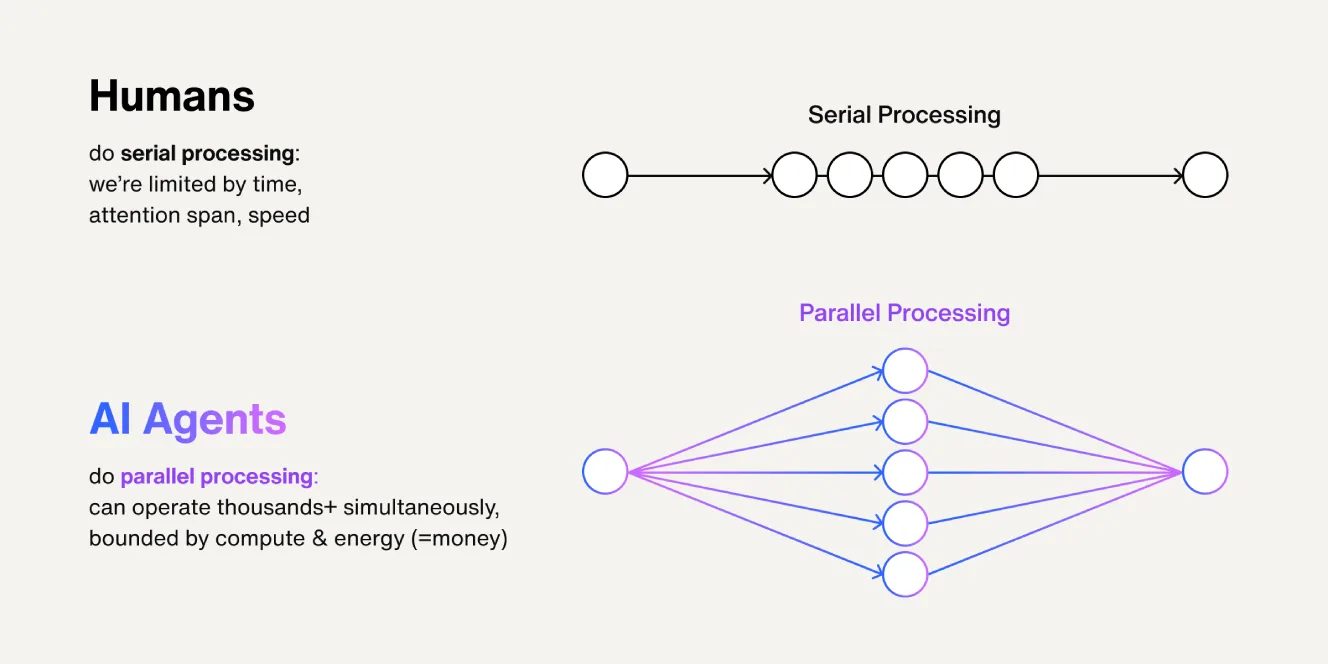
Match agent capabilities to your identified workflows. Tools like Claude Code or GitHub Copilot excel in development, while Salesforce agents integrate deeply with CRM systems. Avoid general-purpose solutions; choose specialized agents that solve specific business problems.
Define clear boundaries for agent autonomy. Establish protocols for human-in-the-loop verification on critical decisions. Ensure all agent interactions comply with data privacy regulations and internal security standards to prevent data leakage or unauthorized actions.
Track key metrics such as task completion time, error rates, and cost savings. Use this data to refine agent prompts and workflows. Continuous monitoring ensures agents remain effective as business processes evolve and new challenges emerge.
KeyTakeaways(items=["Focus on rule-based tasks for initial automation", "Match agent capabilities to specific business needs", "Implement strict governance and security protocols", "Monitor performance and iterate continuously"])
Spotting Weak AI Agent Options
Enterprise AI agents promise automation, but not every tool delivers the expected ROI. Many solutions rely on basic prompt chaining rather than true autonomous reasoning, leading to fragile workflows that break under real-world complexity. Before committing to a vendor, audit their architecture against these common pitfalls.
Over-Reliance on Single-Model Reasoning
Many agents depend on a single large language model for all decision-making. This creates a single point of failure. If the model hallucinates or misinterprets a nuanced business rule, the entire workflow collapses. Look for agents that use multi-model orchestration, where specialized models handle specific tasks like data validation or logic checks, reducing error rates significantly.
Lack of Human-in-the-Loop Safeguards
Autonomous does not mean unmonitored. Weak options often remove human oversight to cut costs, leading to compliance risks and data leaks. Strong enterprise agents include configurable approval gates for high-stakes actions. This ensures that critical decisions, such as financial transactions or customer data modifications, always have a human check before execution.
Poor Integration with Legacy Systems
Many new AI agents struggle to connect with older enterprise software via APIs. They assume modern, cloud-native environments. If a vendor cannot demonstrate seamless integration with your existing ERP or CRM systems, the agent will sit idle. Demand proof of connectors for your specific tech stack before signing any contracts.
Ai agents 2026: what to check next
As autonomous agents move from pilot programs to core infrastructure, enterprise leaders face distinct operational hurdles. The shift from simple prompt-response models to goal-driven systems that plan and act across apps requires rigorous oversight, not just technical deployment. These practical answers address the most common objections to adopting AI agents in 2026.
Are AI agents safe for production use?
Safety depends on the guardrails you build, not the model itself. In 2026, successful deployments use human-in-the-loop architectures where agents propose actions but humans approve high-stakes decisions. You must implement strict permission scopes, ensuring agents can only access the data and systems necessary for their specific goals. Without these boundaries, agents can create compliance risks or trigger unintended financial liabilities.
How do AI agents impact existing workflows?
Agents do not replace jobs; they replace tasks. They orchestrate complex, end-to-end workflows semi-autonomously, handling data aggregation, initial analysis, and routine coordination. This allows your team to focus on exception handling and strategic oversight. The result is a shift from micromanaging daily steps to supervising outcomes, significantly reducing the cognitive load on your workforce.
What is the ROI timeline for AI agents?
Expect a 6-12 month horizon for measurable ROI, as integration is more complex than standard software. Initial costs involve engineering time to define agent goals, integrate APIs, and establish monitoring. However, once deployed, agents provide compounding value by continuously optimizing processes without additional labor costs. The biggest ROI comes from reducing operational friction and accelerating decision cycles across departments.
Can AI agents integrate with legacy systems?
Yes, but integration requires middleware. Most legacy systems lack the APIs agents need to act autonomously. You will likely need to build abstraction layers or use agents that can interpret unstructured data from older interfaces. Start with well-documented, modern systems to prove the concept, then expand to legacy environments as your agent engineering capabilities mature.
No comments yet. Be the first to share your thoughts!