
The shift from prompts to action
The era of simple prompts is over. We are witnessing the agent leap, where AI orchestrates complex, end-to-end workflows semi-autonomously. This transition marks the difference between a tool that waits for instructions and a system that executes them. In 2026, AI agents have moved beyond passive generation to active execution, fundamentally reshaping enterprise operations.
This shift is driven by multi-agent collaboration and advanced tool use. According to the latest industry reports from Google Cloud and Databricks, businesses are no longer experimenting with isolated chatbots. Instead, they are deploying systems that decide, act, and execute tasks across multiple platforms without constant human intervention. The value proposition has shifted from content creation to operational efficiency.
For enterprise decision-makers, this means a change in how technology is evaluated. The focus is now on reliability, security, and the ability to handle complex, multi-step processes. As these systems become more integrated into core business functions, the distinction between software and autonomous worker blurs. The companies that thrive will be those that treat AI agents not as experimental features, but as critical infrastructure for scaling operations.
Agentic AI trends for 2026
The enterprise AI landscape in 2026 has shifted from isolated chatbots to autonomous orchestration. According to Google Cloud, the era of simple prompts is over; organizations are now deploying systems that execute complex, end-to-end workflows with minimal human intervention. This transition requires a fundamental rethinking of infrastructure, moving beyond static models to dynamic agent architectures.
Databricks’ 2026 State of AI Agents report highlights that successful deployment hinges on robust database transformation and integration. Enterprises are no longer just querying data; they are building agents that actively maintain, clean, and leverage proprietary data lakes to make real-time decisions. This shift demands high availability and low-latency connections, qualities reflected in the performance metrics of leading AI infrastructure providers.
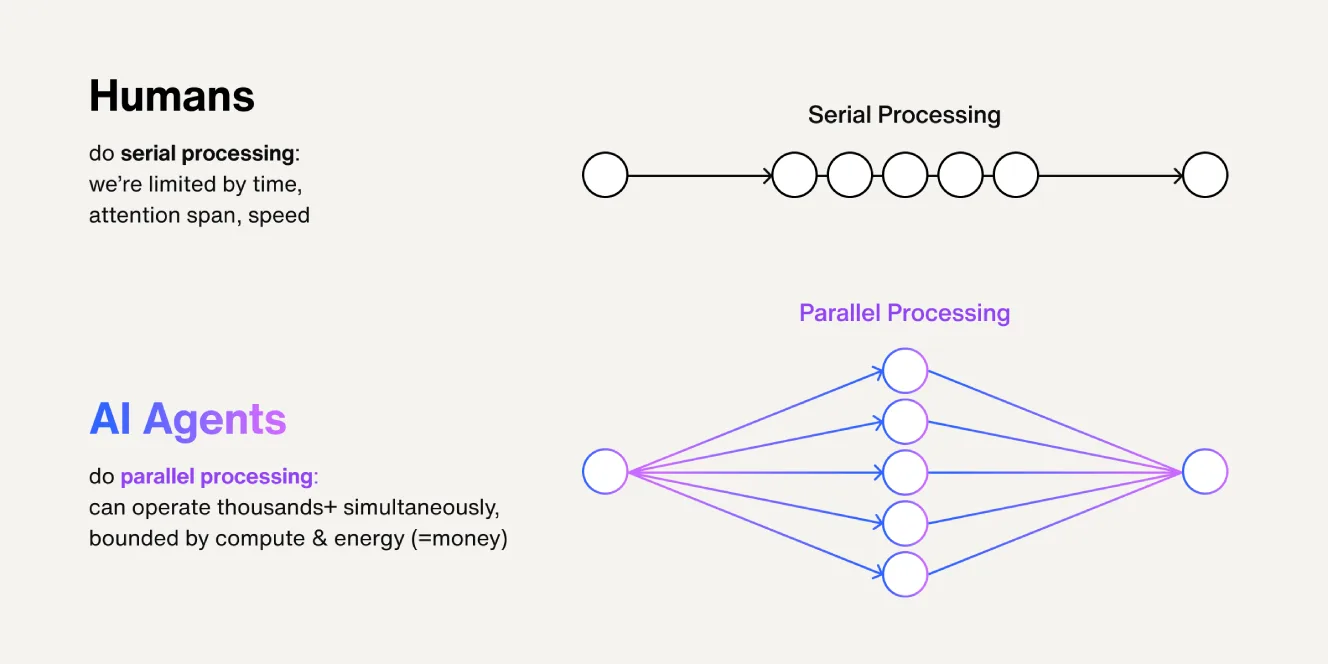
The architectural backbone of these systems relies on seven critical design patterns: Reflection, ReAct, Plan and Execute, Tool Use, Multi-Agent Collaboration, Memory Management, and Human-in-the-Loop. Each pattern addresses specific failure modes, ensuring that agents can self-correct and collaborate effectively. For instance, Multi-Agent Collaboration allows specialized agents to negotiate and delegate tasks, mimicking organizational structures rather than monolithic processing.
As these agents become more autonomous, the market response is evident in the performance of key technology stocks. NVIDIA’s stock chart illustrates the sustained investor confidence in the underlying hardware required to support these intensive, multi-agent workloads. The correlation between infrastructure spend and agent capability growth suggests that 2026 is indeed the year of operational AI, where execution matters more than generation.
Enterprise use cases in production
The theoretical promise of autonomous systems is collapsing into hard balance sheets. In 2026, AI agents are no longer experimental pilots; they are the engine of enterprise automation. Databricks’ latest State of AI Agents report confirms that organizations are shifting from isolated chatbots to multi-step agentic workflows that handle complex, cross-system tasks. This transition marks the end of the "copilot" era and the beginning of the "agent" era, where software acts, decides, and executes without constant human intervention.
The ROI is visible in three primary verticals. In financial services, agents automate trade reconciliation and regulatory reporting, reducing manual errors that previously cost firms millions in compliance fines. In supply chain management, agentic systems monitor global logistics in real-time, rerouting shipments and adjusting inventory orders autonomously when disruptions occur. Customer support has evolved from static FAQ bots to agents that can process refunds, update accounts, and escalate nuanced issues, handling up to 40% of tier-one inquiries without human touch.
To understand the scale of this shift, it helps to compare traditional automation against agentic AI. Legacy RPA (Robotic Process Automation) follows rigid, pre-defined scripts that break when data changes. Agentic AI uses large language models to interpret intent, reason through steps, and adapt to new information. This flexibility allows enterprises to tackle unstructured problems that were previously too expensive or risky to automate.

The following comparison highlights the operational differences between these two approaches:
| Feature | Traditional RPA | Agentic AI | Business Impact |
|---|---|---|---|
| Decision Making | Rule-based, static | Context-aware, dynamic | Adapts to real-time changes |
| Error Handling | Stops on exception | Self-corrects or escalates | Reduces downtime |
| Complexity | Linear, single-step | Multi-step, cross-system | Handles end-to-end workflows |
| Implementation | High code maintenance | Prompt-driven, low-code | Faster deployment |
As these systems scale, the underlying infrastructure costs and market valuations of key providers are reflecting this demand. The financial markets are pricing in the efficiency gains of agentic AI, with enterprise software stocks showing volatility tied to AI integration announcements.
Architectural patterns for reliability
Autonomous agents operate in high-stakes environments where a single hallucination can trigger financial loss or compliance breaches. The industry consensus is stark: Gartner predicts that 40% of AI agent projects will fail by 2027 without robust guardrails and proper architecture [src-serp-8]. To survive, AI agents 2026 deployments must move beyond simple prompt chaining to structured design patterns that enforce safety and consistency.
Production-ready systems rely on seven core patterns, each addressing a specific failure mode. Reflection allows agents to critique their own outputs before execution, reducing error propagation. ReAct (Reasoning + Acting) structures the decision loop, ensuring every action is justified by a clear chain of thought. Plan and Execute separates high-level strategy from low-level task completion, preventing context overflow in complex workflows.
Tool Use and Multi-Agent Collaboration enable specialized handling of external APIs and distributed workloads, while Memory Management ensures agents retain critical context across long sessions. Finally, Human-in-the-Loop patterns provide a mandatory checkpoint for high-risk decisions, allowing operators to intervene when confidence scores drop. These patterns form the backbone of reliable enterprise automation, turning experimental code into mission-critical infrastructure.
Build production-ready agents
Gartner predicts that 40% of AI agent projects will fail by 2027. To avoid becoming part of that statistic, enterprises must move beyond experimental prototypes and implement rigorous architectural standards. Building production-ready AI agents 2026 requires a shift from simple prompting to structured systems with enforceable guardrails.
Start by mapping the agent's operational boundaries. Use established patterns like RAG, MCP, or A2A to structure data flow. Clear scoping prevents hallucination drift and ensures the agent stays within its authorized domain.
Deploy middleware that intercepts inputs and outputs before they reach the model or the user. This layer enforces compliance policies, filters sensitive data, and blocks malicious prompts, acting as the immune system for your AI infrastructure.
Never deploy directly to production. Run agents through automated regression tests and adversarial simulations in a isolated sandbox. Validate that the agent handles edge cases without breaking core business logic or violating security protocols.
Success in 2026 depends on treating AI agents as critical infrastructure, not experimental toys. By prioritizing architecture and safety from day one, enterprises can scale automation with confidence.
Frequently Asked Questions About AI Agents 2026
Will 2026 be the year of AI agents?
2026 marks the transition from experimental pilots to enterprise-scale deployment. Businesses are moving beyond simple chatbots to deploy AI agents that autonomously act, decide, and execute complex workflows. This shift is reshaping operational scalability, as organizations prioritize systems that deliver measurable ROI over theoretical capabilities.
What are the core AI agent architecture patterns in 2026?
Production-ready AI agents rely on seven critical design patterns: Reflection, ReAct, Plan and Execute, Tool Use, Multi-Agent Collaboration, Memory Management, and Human-in-the-Loop. These patterns address specific failure modes, ensuring agents remain stable and reliable in high-stakes environments. Gartner predicts that 40% of AI agent projects will fail by 2027 if these architectural foundations are ignored.
How do AI agents differ from traditional automation?
Traditional automation follows static, rule-based scripts. AI agents 2026 operate with dynamic reasoning, allowing them to adapt to changing conditions, retrieve external data, and utilize tools autonomously. This distinction enables enterprises to handle unstructured tasks that previously required human intervention, reducing latency and operational errors.
No comments yet. Be the first to share your thoughts!