
The shift from prompts to autonomous workflows
The era of simple prompts is over. As defined in the 2026 State of AI Agents report by Google Cloud, the industry is witnessing an "agent leap" where AI orchestrates complex, end-to-end workflows semi-autonomously. This marks a fundamental departure from the chatbots of previous years, which were limited to generating text responses based on immediate queries. Today's AI agents 2026 are operational tools capable of planning, executing, and optimizing tasks across multiple enterprise systems without constant human intervention.
This shift is driven by the need for operational efficiency rather than novelty. According to Databricks, enterprise adoption is accelerating as organizations move beyond experimental use cases to integrate agents into core business processes. The market reflects this urgency: the global AI agents market size is projected to grow from USD 11.55 billion in 2026 to approximately USD 294.66 billion by 2035, expanding at a CAGR of 43.57%. This growth is not speculative; it is grounded in the measurable reduction of manual labor and the acceleration of decision-making cycles.
For finance and enterprise decision-makers, the distinction is critical. AI agents do not just answer questions; they perform actions. They can reconcile ledgers, flag anomalies, and initiate corrective workflows across connected databases. Understanding how these systems plan and execute is no longer optional but a core competency for maintaining competitive advantage. The focus has shifted from whether AI can speak to whether it can act reliably within established operational constraints.
The market size for AI agents 2026
The global AI agents market is projected to reach $11.55 billion in 2026, up from $7.92 billion in 2025. This growth signals a shift from experimental pilots to operational deployment. As these systems begin acting inside real workflows, understanding how they plan, optimize, and execute will no longer be optional for enterprise decision-makers.
The expansion is not limited to the current year. The market is predicted to grow at a CAGR of 43.57% from 2026 to 2035, potentially reaching approximately $294.66 billion by the end of the decade. This trajectory reflects the increasing reliability and integration of AI agents into complex business processes, moving beyond simple automation to autonomous execution.
For investors and analysts tracking this sector, the performance of broader market indices often correlates with enterprise technology adoption cycles. Monitoring major indices like the S&P 500 provides context for the capital flowing into AI infrastructure and software development.
Apple's stock performance serves as a proxy for consumer and enterprise technology sentiment. While AI agents are primarily an enterprise play, the underlying hardware and cloud infrastructure demands often drive broader tech sector valuations. This chart illustrates the daily trading volume and price action, highlighting market liquidity and investor interest in the tech sector.
The rapid expansion from 2025 to 2026 is driven by three factors: improved reliability of large language models, better integration with existing enterprise software, and a clear return on investment for automation tasks. Companies that adopt AI agents early are likely to see significant efficiency gains, while those that wait may face competitive disadvantages.
As the market matures, the focus will shift from mere adoption to optimization. Enterprises will need to manage the complexity of multiple AI agents working together, ensuring they align with business goals and comply with regulatory standards. This operational reality will define the next phase of the AI agent economy.
The infrastructure powering AI agents 2026
The shift toward autonomous AI agents 2026 is no longer theoretical; it is an operational reality driven by a rapidly maturing stack of frameworks and platforms. As the global AI agents market size is predicted to increase from USD 11.55 billion in 2026 to approximately USD 294.66 billion by 2035, the underlying infrastructure must support complex planning, memory management, and multi-step execution within enterprise environments [Precedence Research].
Enterprise adoption is currently anchored by a few dominant players, each offering distinct advantages for specific operational needs. Databricks leads with its unified data analytics foundation, allowing agents to access real-time enterprise data without complex ETL pipelines. IBM focuses on governance and security, providing the trust layers required for regulated industries. Meanwhile, Google Cloud and open-source frameworks like LangGraph are enabling developers to build sophisticated, stateful agent workflows that can handle intricate business logic.
The following comparison outlines the key differentiators among the leading platforms powering this transition.

| Framework | Core Strength | Pricing Model | Enterprise Readiness |
|---|---|---|---|
| Databricks | Unified data and AI analytics | Consumption-based (Unity Catalog) | Native integration with enterprise data lakes |
| IBM watsonx | Governance, trust, and compliance | Subscription and usage-based | Built-in audit trails and risk management |
| Google Vertex AI | Multi-model access and MLOps | Pay-per-token and compute | VPC service endpoints and IAM integration |
| LangGraph | Stateful, multi-agent orchestration | Open-source (self-hosted) | Requires custom deployment and monitoring |
Selecting the right infrastructure depends on whether your priority is data integration, regulatory compliance, or development flexibility. Databricks is ideal for organizations already invested in the Lakehouse architecture, while IBM watsonx serves those in highly regulated sectors like finance and healthcare. For teams prioritizing rapid iteration and custom agent logic, open-source frameworks like LangGraph provide the necessary control, albeit with higher operational overhead.
Key use cases driving enterprise adoption
The 2026 enterprise landscape is defined by a shift from experimental AI pilots to operational AI agents. According to the 2026 State of AI Agents report from Databricks, organizations are prioritizing use cases that deliver immediate efficiency gains and measurable ROI. The market is moving beyond simple chatbots to autonomous systems that handle complex, multi-step workflows across customer support, data analysis, and operational automation.
Customer support and service automation
AI agents are transforming customer service by handling tier-one and tier-two support queries with minimal human intervention. These agents can resolve issues, process refunds, and guide users through troubleshooting steps autonomously. This shift reduces response times and allows human agents to focus on complex, high-value interactions. Enterprise adoption is accelerating as these systems integrate directly with CRM and ticketing platforms, ensuring a consistent customer experience.
Data analysis and business intelligence
In the data sector, AI agents are acting as autonomous analysts. Instead of waiting for a human to write SQL queries or build dashboards, agents can interpret natural language questions, access relevant databases, and return actionable insights. This capability, highlighted in recent IBM guides, allows decision-makers to access real-time data without technical bottlenecks. The result is a significant reduction in the time between data collection and strategic action.
Operational automation and workflow execution
Beyond customer-facing roles, AI agents are streamlining internal operations. They automate routine tasks such as invoice processing, inventory management, and HR onboarding. By connecting disparate enterprise systems, these agents ensure data flows smoothly between departments, reducing manual entry errors and increasing overall operational efficiency. This operational reality is the primary driver of the projected market growth, as businesses seek to optimize their core workflows.
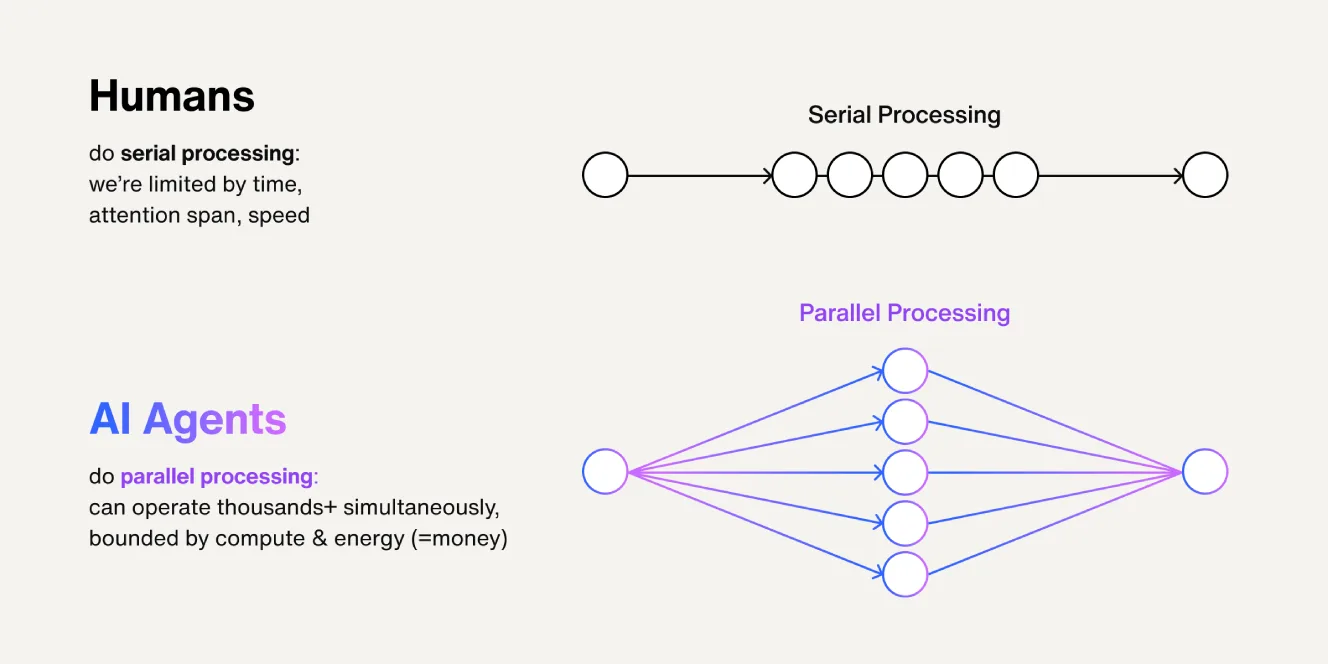
Risks and governance in autonomous systems
As AI agents 2026 deployments move from experimental pilots to core enterprise workflows, the margin for error shrinks significantly. Unlike traditional software, autonomous agents operate with a degree of unpredictability that demands new governance frameworks. The primary concerns are no longer just data privacy but the operational integrity of decisions made without human oversight.
Security risks escalate when agents interact with external APIs and databases. A single hallucination or misinterpreted instruction can trigger cascading failures across connected systems. Governance must therefore shift from passive monitoring to active guardrails, ensuring that agents operate within strictly defined boundaries.
IBM and Google Cloud emphasize that robust governance is not optional but foundational. Without clear protocols for auditing agent behavior and restricting access, enterprises expose themselves to significant financial and reputational damage. The cost of a breach or error in an autonomous workflow often exceeds the cost of implementing rigorous controls from the start.
The path forward requires balancing autonomy with accountability. Organizations must define clear lines of responsibility for agent outputs, ensuring that every automated action can be traced back to a specific decision logic. This transparency is essential for maintaining trust in AI-driven processes.
Frequently asked questions about AI agents 2026
As enterprises move from pilot programs to production, specific operational questions replace early-stage speculation. The following answers address the most common search intents regarding market size, platform selection, and the current maturity of autonomous systems.
No comments yet. Be the first to share your thoughts!