
The 2026 agent leap explained
The era of simple prompts is over. As reported by Google Cloud, we are witnessing the "agent leap"—a structural shift where AI moves from passive response to orchestrating complex, end-to-end workflows semi-autonomously.
This transition represents more than a technical upgrade; it is an economic force. In the finance market vertical, reliability and enterprise impact are paramount. The value of an AI agent lies not in its ability to answer a question, but in its capacity to execute a task with precision and accountability.
Adoption trends indicate a rapid acceleration in enterprise deployment. The following chart visualizes the growing market sentiment and adoption trajectory for autonomous AI systems, reflecting the increasing integration of agent-based workflows into critical business infrastructure.
Enterprise adoption metrics
The transition from experimental chatbots to autonomous agents is no longer a question of "if" but "how fast." Enterprise adoption is accelerating, driven by the tangible efficiency gains in complex workflows that rule-based automation cannot handle. According to Databricks' 2026 State of AI Agents report, enterprise interest has shifted from simple retrieval-augmented generation (RAG) to agents that can execute multi-step tasks across internal systems.
Reliability remains the primary gatekeeper for deployment. In high-stakes financial and operational environments, an agent's ability to maintain context and avoid hallucination errors is more critical than raw speed. IBM's 2026 Guide to AI Agents emphasizes that successful enterprise integration requires rigorous testing frameworks and human-in-the-loop oversight for critical decision points. This focus on stability explains why many organizations are starting with internal-facing agents for code generation and data analysis before moving to customer-facing roles.
Market sentiment reflects this pragmatic approach. Investors and CTOs are prioritizing agents that demonstrate clear ROI in specific verticals, such as automated compliance checking or supply chain optimization, rather than general-purpose assistants. The data suggests a bifurcation in the market: a smaller segment of early adopters deploying fully autonomous workflows, and a larger majority piloting agentic tools in controlled, low-risk environments.
This divergence highlights the current state of the industry. While public discourse often focuses on the futuristic potential of fully autonomous agents, the enterprise reality is one of cautious, measured integration. The metrics show that adoption is real, but it is being driven by necessity and reliability, not just hype.
Top agent use cases in 2026
By 2026, the conversation has shifted from experimentation to execution. Organizations are no longer asking whether to build agents, but how to deploy them reliably at scale. The highest-value applications are those that replace fragmented manual workflows with end-to-end autonomous loops, particularly in finance, supply chain, and customer operations.
Autonomous financial reconciliation
Finance teams use agents to close the books faster and more accurately. Instead of manually matching transactions across disparate systems, agents ingest bank feeds, ERP data, and invoice records, then flag discrepancies for human review. This reduces the close cycle from days to hours. According to LangChain’s 2026 State of Agent Engineering report, enterprises prioritizing reliability see the fastest ROI in this vertical, as financial errors carry the highest risk.

Supply chain anomaly detection
Supply chain agents monitor logistics in real-time, predicting delays before they happen. By analyzing weather patterns, port congestion data, and supplier performance, these agents reroute shipments automatically. This proactive approach minimizes downtime and reduces inventory holding costs. The Agentic List 2026 highlights several companies specializing in this niche, noting that autonomous logistics is becoming a core competitive advantage for retailers.
Customer support resolution
Customer service agents handle complex queries that previously required human escalation. They access knowledge bases, process refunds, and update CRM records without human intervention. This shifts human agents to high-value, empathetic interactions. The result is a 40% reduction in response times and a significant increase in customer satisfaction scores.
| Task | Manual Workflow | Agent-Driven Workflow |
|---|---|---|
| Financial Reconciliation | Days of manual matching | Hours of autonomous processing |
| Supply Chain Monitoring | Reactive delay management | Proactive rerouting |
| Customer Support | Tiered escalation | First-contact resolution |
| Task | Manual Workflow | Agent-Driven Workflow |
|---|---|---|
| Financial Reconciliation | Days of manual matching | Hours of autonomous processing |
| Supply Chain Monitoring | Reactive delay management | Proactive rerouting |
| Customer Support | Tiered escalation | First-contact resolution |
Barriers to production deployment
The transition from prototype to production reveals the structural weaknesses in current autonomous systems. As noted in LangChain’s 2026 State of Agent Engineering report, organizations have largely moved past the question of whether to build agents to the more difficult problem of deploying them reliably at scale. This shift marks a critical inflection point where theoretical capability meets operational reality.
Reliability remains the primary bottleneck. Unlike deterministic code, agentic workflows involve non-linear decision paths that can diverge significantly from expected outcomes. A single hallucination in a planning step can cascade through subsequent tool calls, leading to costly errors in financial or operational contexts. Enterprise leaders are finding that standard validation techniques are insufficient for systems that generate their own execution paths.
Observability and testing present equally steep challenges. Without granular visibility into every reasoning step and tool interaction, debugging a failed agent is akin to tracing a black box. Teams must implement comprehensive logging and tracing infrastructure to monitor agent behavior in real time. This is not merely a technical requirement but a governance necessity for high-stakes deployments.
The market is responding to these friction points with specialized infrastructure. As adoption curves rise, the focus is shifting toward platforms that offer built-in safeguards and monitoring capabilities. The following chart illustrates the current market sentiment regarding agentic AI adoption, reflecting the growing investment in solving these deployment hurdles.
Building reliable agent systems
Reliability is the primary bottleneck for enterprise adoption. As organizations move from experimental prototypes to production-scale deployments, the focus shifts from novelty to stability. LangChain’s 2026 survey indicates that the central challenge is no longer capability, but the ability to deploy agents efficiently and at scale without unpredictable failures [LangChain State of Agent Engineering].
To achieve this, engineering teams must adopt a rigorous evaluation framework. This requires treating agent reliability as a measurable asset class rather than a soft engineering goal. The following steps outline the core practices for building robust systems.
Move beyond simple success/failure binaries. Establish precise metrics for latency, token efficiency, and action correctness. Use regression testing to ensure that updates to underlying models do not degrade performance on critical workflows.
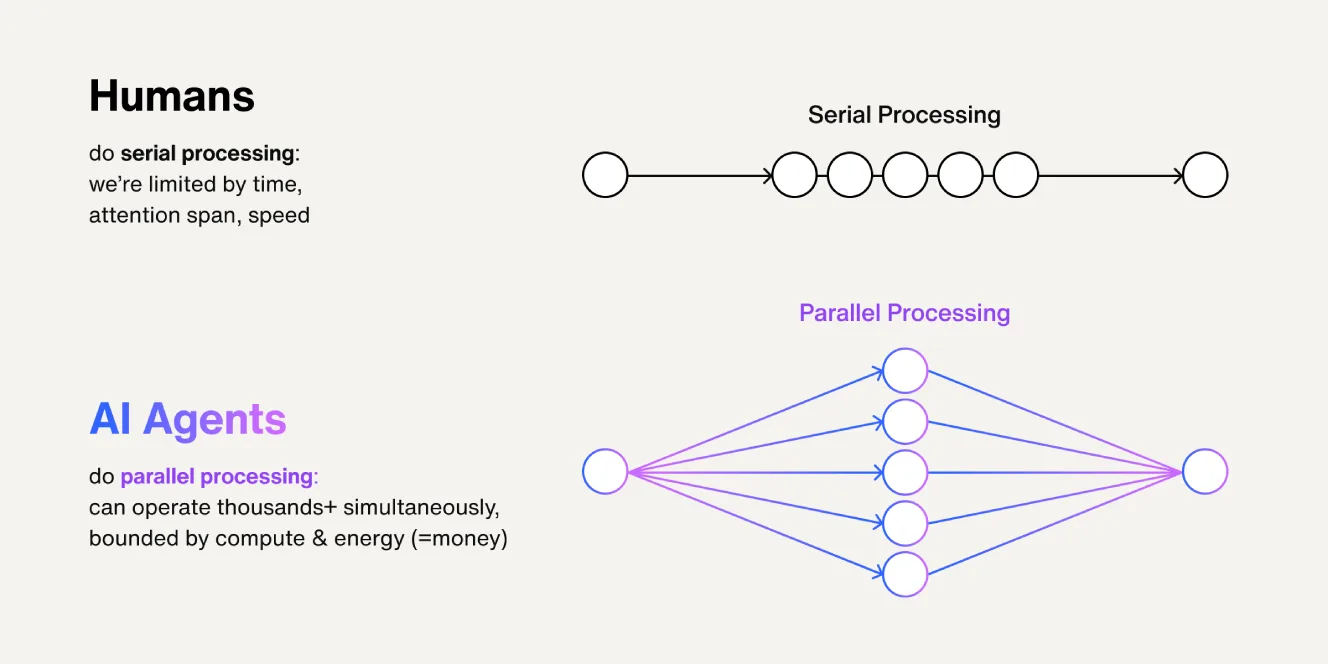
Deploy middleware that intercepts and validates agent actions before execution. This includes input sanitization, output validation, and permission checks. Guardrails act as a circuit breaker, preventing costly errors in financial or operational contexts.
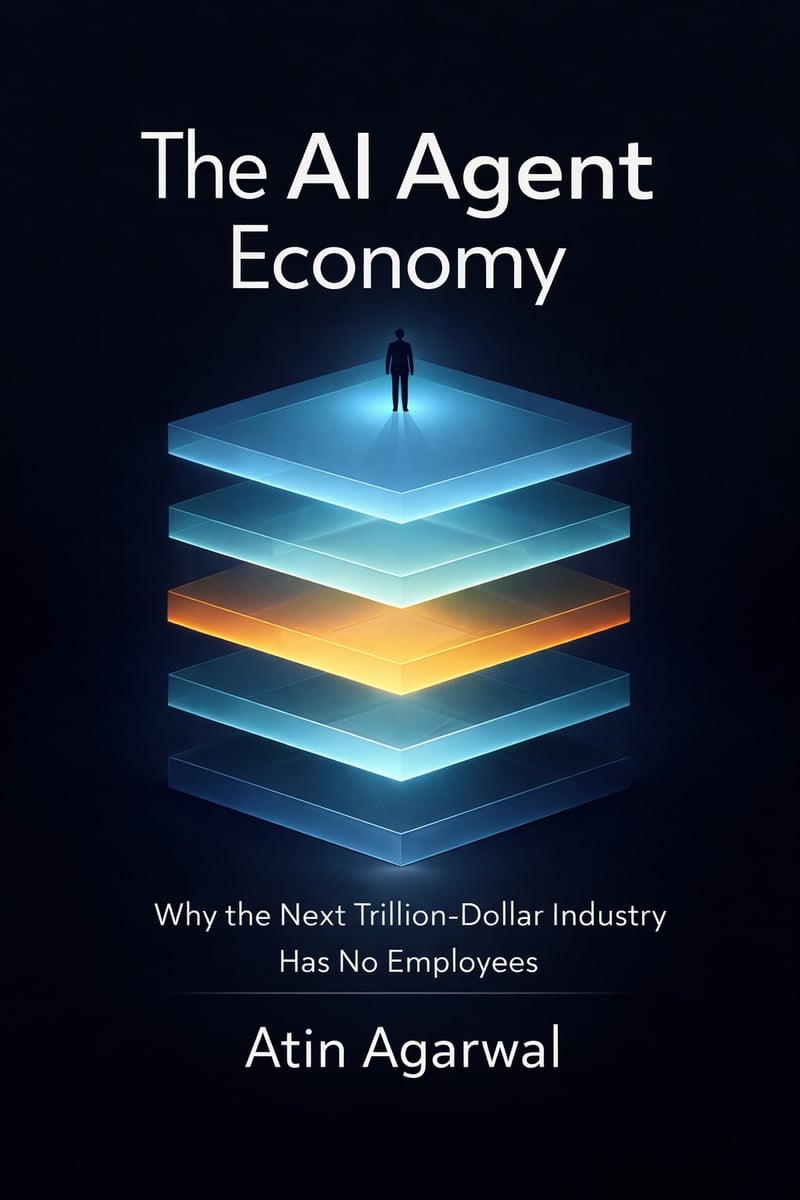
Simulate edge cases that rarely occur in production but can cause catastrophic failure. Test for prompt injection, context window limits, and API rate limits. This proactive testing reveals hidden vulnerabilities in the agent’s reasoning chain.
The adoption of these engineering practices directly correlates with market confidence. As seen in the chart above, enterprise tech firms that prioritize robust AI infrastructure are seeing sustained investor interest, reflecting the broader shift toward reliable, autonomous systems.
No comments yet. Be the first to share your thoughts!