

In the volatile arena of prediction markets, where fortunes pivot on the edge of foresight, AI onchain data fusion emerges as the linchpin for strategies that outpace human intuition. Picture this: decentralized platforms like Polymarket, ballooning to a staggering $21.5 billion valuation within a $44 billion industry by 2026, now supercharged by AI agents that sift through blockchain's immutable ledger in real time. These aren't just tools; they're autonomous sentinels, clustering markets semantically, spotting dependencies invisible to the naked eye, and delivering returns that mock traditional analysis. As a commodities veteran who's watched physical assets mirror blockchain tremors, I see this fusion echoing the precision of futures pits fused with algorithmic edge.
Semantic Trading: Uncovering Latent Market Structures
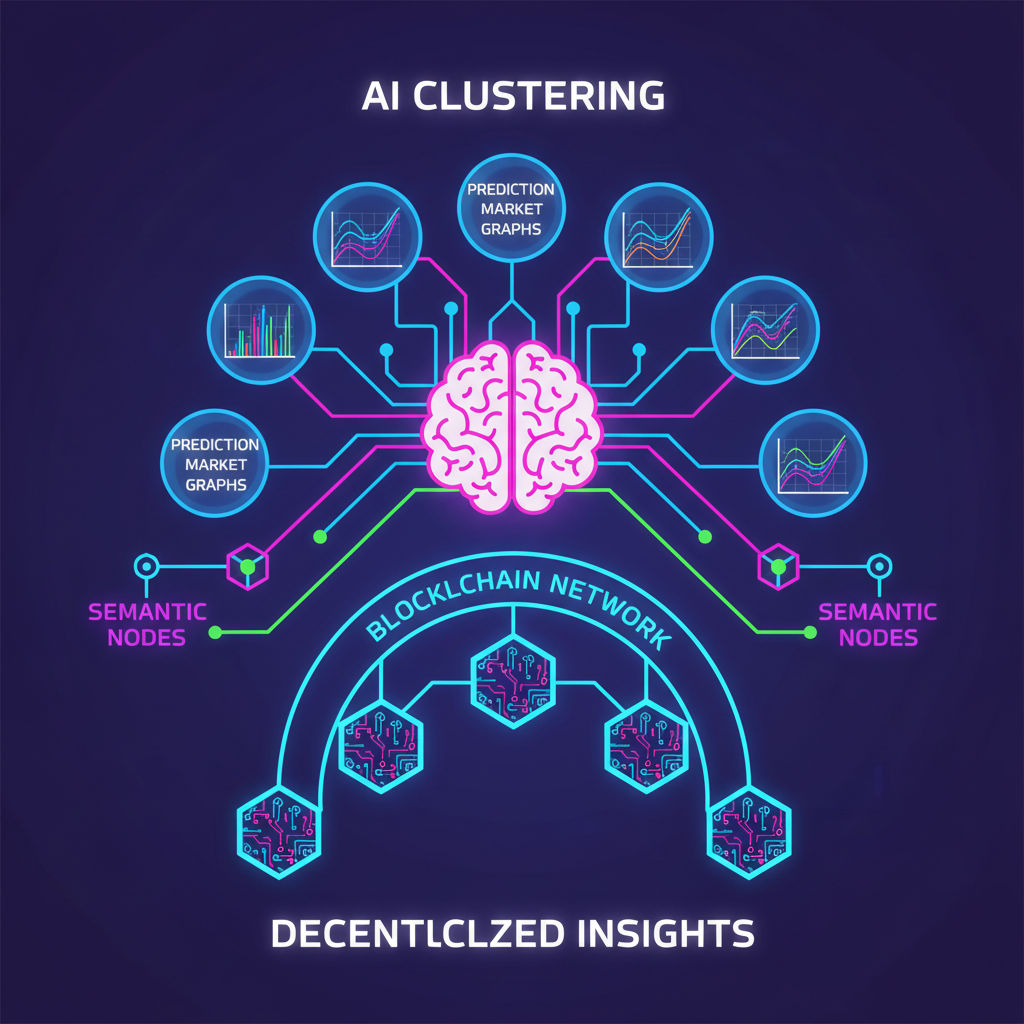
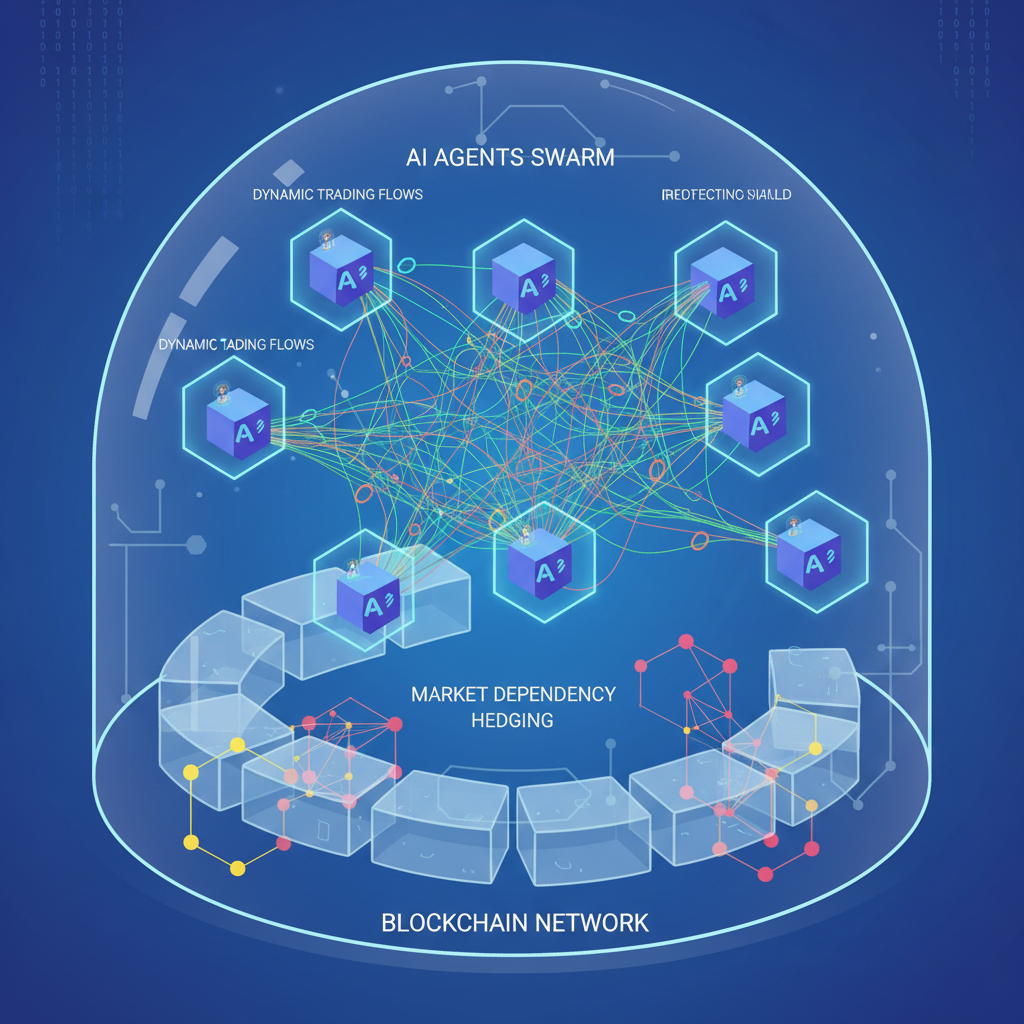
At the heart of advanced prediction market strategies lies semantic trading, a breakthrough where AI pipelines autonomously group prediction markets into coherent clusters and pinpoint dependent pairs. Researchers unveiled this in a recent arXiv paper, clocking 60-70% accuracy and averaging 20% returns over weekly horizons. It's no parlor trick; this method leverages natural language processing on market titles and descriptions alongside onchain volumes and resolutions, revealing correlations that manual traders miss. In DeFi's prediction fusion landscape, where Polymarket dominates, such clustering turns noise into narrative, allowing positions in one election outcome to hedge sports bets or crypto events seamlessly.
I've long argued that commodities echo in blockchain, and here it proves true: just as oil futures correlate with geopolitical whispers, prediction markets entwine politics, weather, and meme coins. AI onchain data fusion elevates this by embedding verifiable blockchain states, sidestepping oracle pitfalls that plague centralized forecasts. Platforms increasingly rely on these signals, from automated market makers to portfolio managers, as noted in recent X discussions on AI opacity risks mitigated by transparent chains.
Core Advantages of Semantic Clustering
- 60-70% Accuracy Gains: AI pipeline autonomously clusters prediction markets into coherent groups, achieving 60-70% accuracy in semantic trading. Arxiv
- 20% Weekly Returns: Delivers ~20% average returns over week-long periods by uncovering latent structures. Arxiv
- Dependency Hedging: Identifies dependent market pairs for strategic hedging and risk mitigation.
- Onchain Verifiability: Leverages blockchain for transparent, immutable outcomes, as in Chainlink's AI-integrated markets. Chainlink
ASTIF Framework: Adaptive Fusion of Semantics and Time
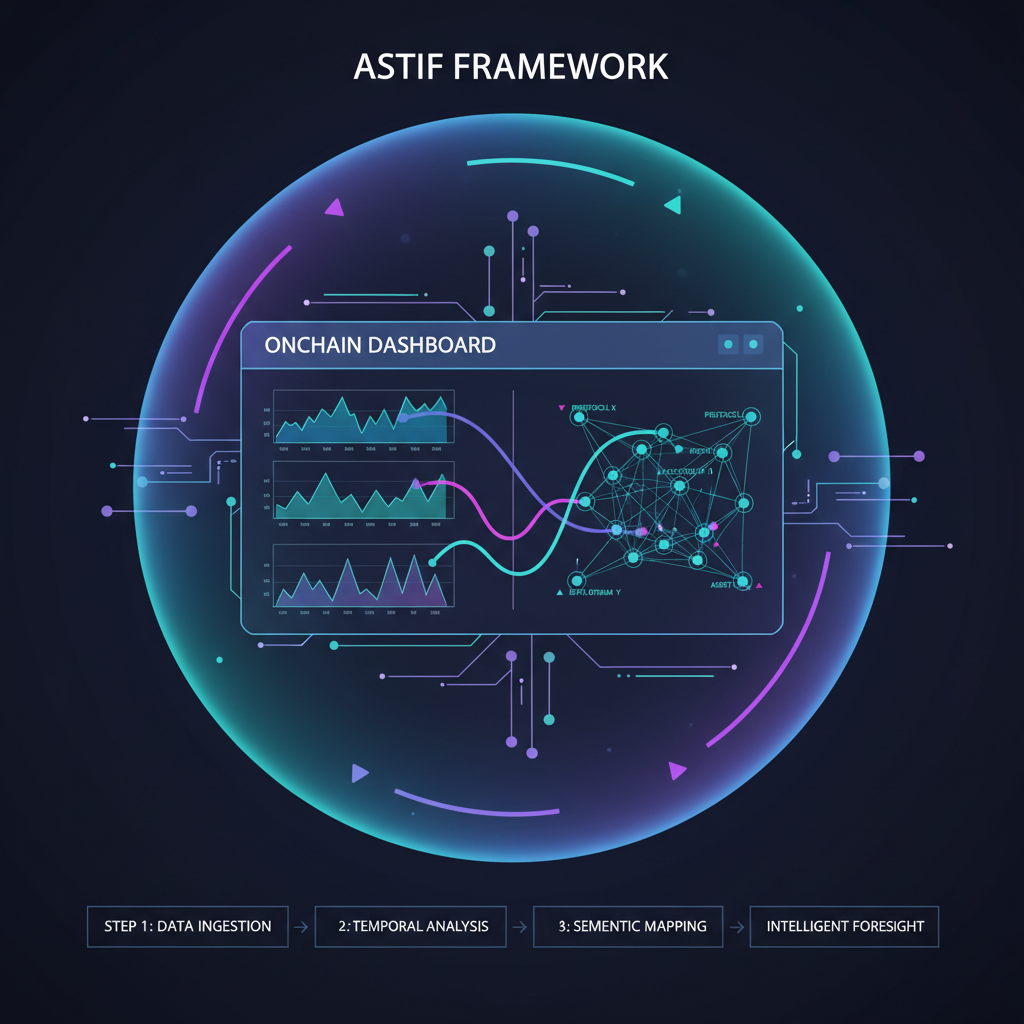
Building on semantics alone falls short in crypto's frenzy; enter the Adaptive Semantic-Temporal Integration Framework (ASTIF). This hybrid beast marries market cues with numerical trends, dynamically shifting forecasting tactics mid-stream. Outperforming deep learning rivals in crypto price predictions, ASTIF demonstrates why hybrid feeds advanced tactics are non-negotiable. It processes onchain metrics like liquidity shifts and sentiment spikes from AI agents, adapting to volatility that static models choke on.
Consider institutional funds automating via Stoic AI insights: monitoring sentiment swings to execute before prices adjust. ASTIF amplifies this, fusing DeFi x AI market maps from Decasonic with real-time blockchain data. The result? Strategies that don't just predict but preempt, turning prediction markets into onchain goldmines. My take: this isn't hype; it's the convergence Onchain Foundation flagged for 2025 businesses, where AI-blockchain hybrids yield verifiable edges over opaque black boxes.
Traditional vs. AI-Enhanced Prediction Strategies
| Aspect | Traditional Strategies | AI-Enhanced Strategies |
|---|---|---|
| Methodology | Manual analysis | AI Fusion, Semantic Clustering, Adaptive Models (e.g., ASTIF framework) |
| Accuracy | 40-50% | 60-70% |
| Update Frequency | Weekly reviews | Real-time / Adaptive |
| Average Returns | Low (not specified) | 20% (over week-long periods) |
| Key Examples | Basic manual reviews | Semantic Trading Pipeline (arxiv.org/abs/2512.02436), Chainlink AI Prediction Markets (docs.chain.link) |
AI Agents as DeFi's New Market Movers
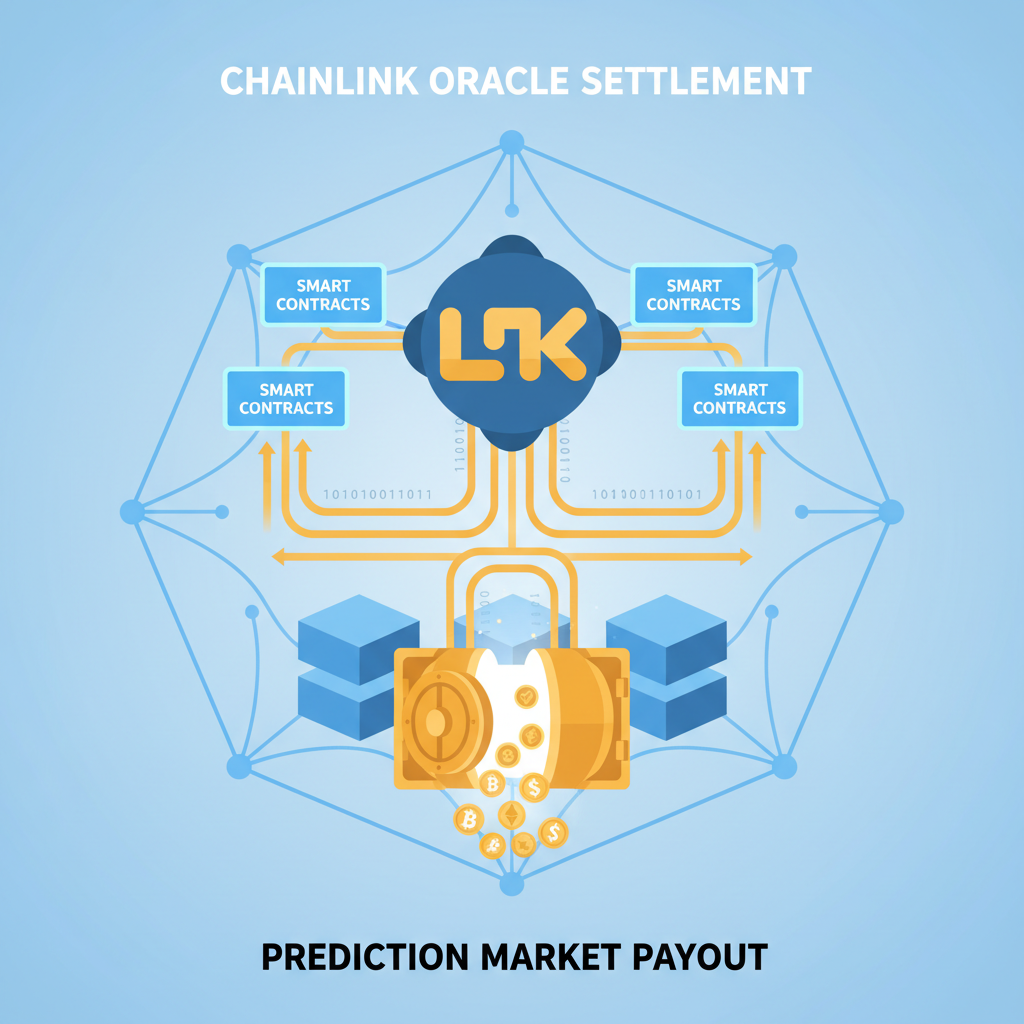
AI agents aren't spectators; they're the next users in DeFi, as Garima Singh highlights on LinkedIn. Executing trades on sentiment before markets price them, these agents manage liquidity pools, assess risks, and run predictive analytics. Chainlink's end-to-end prediction markets exemplify this: AI automates creation, staking, and settlement with external service integration, ensuring immutable outcomes. DeFAI, blending AI with DeFi, simplifies yield farming and trading, projected to swell the AI-blockchain market past $703 million by 2025.
Springer Nature underscores AI's prowess in blockchain anomaly detection and fraud flagging, vital for prediction integrity. Yet, opacity lingers; that's where onchain AI strategies shine, grounding agents in tamper-proof data. Towards Finance notes AI tokens leading with machine learning composability, while Ledger's DeFAI automates the grunt work. Strategically, deploy these for DeFi prediction fusion: agents cluster via semantic pipelines, adapt via ASTIF, and settle via Chainlink, crafting portfolios resilient to black swans. In my 16 years bridging commodities to crypto, this fusion feels like the physical trader's dream digitized.
But dreams digitize only when strategies operationalize. Traders wielding hybrid feeds advanced tactics now layer these AI insights atop onchain derivatives, much like I overlaid weather data on grain futures back in the pits. The edge? Verifiable fusion that Chainlink's prediction markets pioneer, where AI oracles feed external signals into smart contracts for automated resolutions. This isn't theoretical; it's live, transforming $44 billion prediction arenas into precision instruments.
Deploy AI Onchain Fusion: Unlock Advanced Prediction Market Strategies

Practical DeFi Prediction Fusion TacticsLayering Agents with Onchain Verifiability
Picture autonomous agents patrolling Polymarket's depths, not just predicting but arbitraging semantic clusters. One agent flags a political outcome mirroring a sports upset via latent dependencies; another deploys ASTIF to forecast resolution timelines amid volatility spikes. This DeFi prediction fusion cascades into yield optimization, where agents rebalance liquidity pools based on fused signals, echoing how I timed commodity spreads with satellite imagery fused to exchange ticks.
Opacity? A relic when onchain states anchor every decision. DeFi protocols lean on these AI signals for everything from automated market makers to fraud detection, as Springer Nature details in blockchain anomaly sweeps. Yet the real power surges in institutional automation: funds script strategies around sentiment shifts, per Stoic AI, executing before human hesitation dulls the blade. My strategic read? Prioritize platforms fusing AI with verifiable oracles; anything less invites the oracle problem that sank early experiments.
Decasonic's DeFi x AI maps reveal a burgeoning ecosystem, with tokens blending machine learning into composable primitives. Ledger's DeFAI agents handle the tedium, farming yields while you craft macro plays. Opinionated take: dismiss siloed AI hype; true alpha hides in onchain AI strategies that timestamp every prediction against blockchain truth. Garima Singh nails it; these agents aren't users, they're market movers, pricing inefficiencies extinct.
Metrics That Matter: Benchmarking Fusion Performance
Quantifying the fusion demands rigor. Semantic pipelines deliver 60-70% accuracy; ASTIF laps deep learning in crypto forecasts; agents propel markets toward $703 million convergence by 2025. But drill deeper: weekly 20% returns aren't anomalies, they're baselines for clustered hedging. Onchain portfolio managers thrive here, opacity traded for transparency as X threads warn.
Key Performance Metrics for AI Fusion Strategies
| Metric | Details |
|---|---|
| Accuracy | 60-70% (Semantic) |
| Returns | 20% avg weekly |
| Adaptation | Real-time ASTIF |
| Market Size | $44B predictions, $703M AI-DeFi |
| Platforms | Polymarket $21.5B, Chainlink oracles |
These benchmarks guide allocation: overweight semantic clusters with high volume; underweight isolated bets sans dependencies. Towards Finance spotlights AI tokens as entry vectors, their composability amplifying fusion yields. In practice, fuse onchain states from derivatives feeds, mirroring commodities' physical-to-futures bridge I mastered over 16 years.
Risk Management in the Fusion EraGuarding Against Black Swans Onchain
Volatility defines prediction markets, but fusion fortifies. AI flags anomalies in real time, predicts defaults akin to loan protocols, per research insights. Agents automate risk corridors, pausing executions on outlier detections, while Chainlink ensures settlement integrity. My commodities lens? Treat predictions like weather derivatives: fuse signals, hedge extremes, verify outcomes. This mitigates DeFi's wild swings, turning $21.5 billion Polymarket into a stable goldmine.
Forward gaze: 2026's autonomous dawn, as Trent V. Bolar envisions, sees agents self-optimizing entire strategies. Onchain Foundation's 2025 predictions align; businesses betting on this convergence reap first-mover premiums. Strategically, bootstrap with open-source pipelines, scale via DeFAI tools, and always anchor to blockchain's unyielding ledger. Commodities echo in blockchain, alright; now AI fuses the chorus into symphonies of sustained alpha.




No comments yet. Be the first to share your thoughts!