
Why feeds matter for AI agents
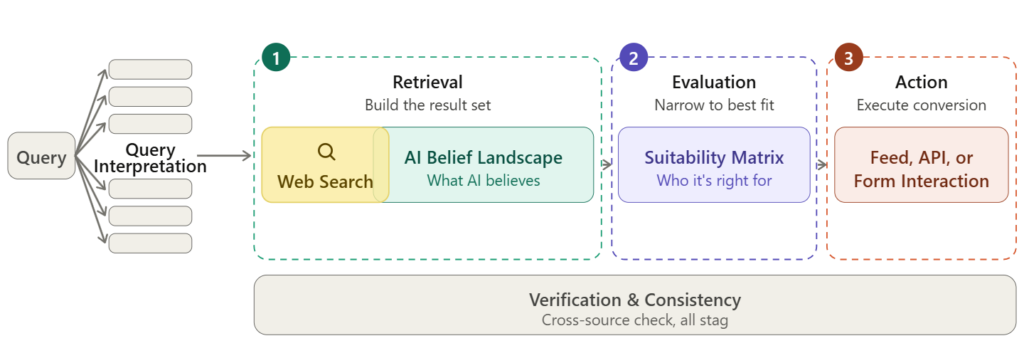
Traditional SEO relies on humans reading web pages. AI shopping agents rely on structured data. When a user asks an agent like ChatGPT, Gemini, or Perplexity for a product recommendation, the agent does not browse the open web for general information. It queries your product feed directly.
If your feed lacks complete attributes, the agent cannot verify price, availability, or specifications. Without this data, the agent skips your product entirely, regardless of your keyword optimization. Structured data is now the primary input for generative search.
Proper optimization can increase visibility by 3-4 times compared to unoptimized feeds. The difference is not in marketing copy; it is in the data schema. Agents need clean, machine-readable fields to make confident purchasing suggestions.
Audit your current data structure
Before adjusting bids or rewriting titles, you must verify the integrity of your raw product data. Agents rely on structured signals to match queries; if your feed lacks foundational attributes, these agents cannot process your products regardless of your ad spend.
Start by cross-referencing your feed against Google’s official Product Data Specifications. Focus on three critical areas:
- GTINs and Identifiers: Ensure every unique product has a valid Global Trade Item Number (GTIN), MPN, or Brand. Missing identifiers are the most common reason AI agents skip a product entirely.
- Attribute Completeness: Check for missing
color,size,material, andage_group. Agents use these to narrow search results; empty fields reduce relevance. - Inventory Sync: Verify that your
availabilityandpricefields update within hours, not days. Stale data leads to wasted impressions when items are out of stock.
Use this checklist to validate your feed’s health before moving to optimization.
-
All products have valid GTIN/MPN/Brand
-
No null values in required attributes
-
Price and availability sync < 24 hours
-
Feed passes Google Merchant Center diagnostics
Once your data structure is clean, you can confidently move to enriching product descriptions for AI understanding.
Enrich product attributes with AI
AI shopping agents rely on structured data to match shopper intent. When product feeds lack critical attributes, these agents cannot verify relevance, causing your items to disappear from search results. Achieving a 95% attribute fill rate is not optional; it is the baseline requirement for visibility in 2026.
Manual enrichment is too slow and error-prone for modern catalogs. AI tools can extract missing details from unstructured sources—such as product descriptions, images, or supplier documents—and populate fields like color, material, size, and age_group automatically. This ensures your feed meets the strict schema requirements of agents like Google's AI Overviews or specialized shopping assistants.
The process involves three main phases: auditing gaps, deploying AI extraction, and validating the output.
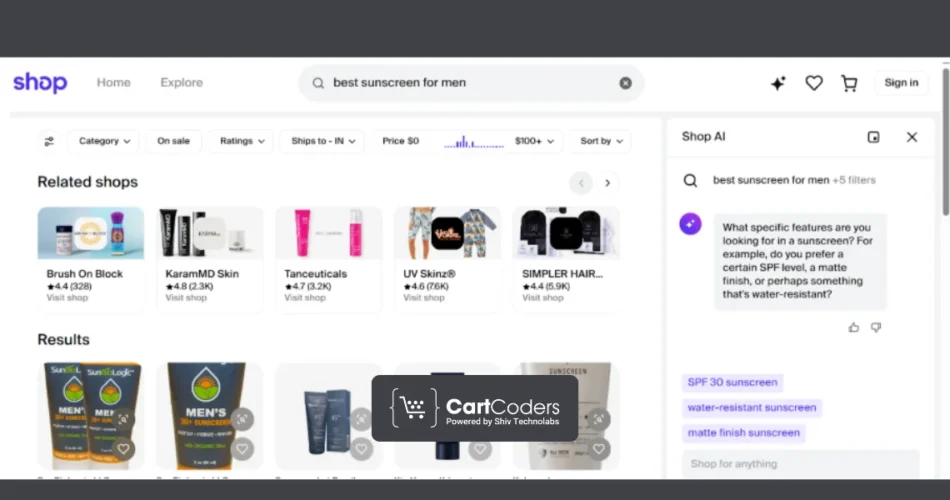
Start by running a diagnostic against your current feed. Identify which mandatory attributes are empty or incorrectly formatted. Focus on fields that AI agents use for filtering, such as brand, GTIN, and specific product dimensions. This baseline tells you exactly where the AI needs to intervene.

Connect an AI enrichment platform to your product data source. Configure the tool to scan unstructured text and images for missing attributes. The AI should map extracted values to your feed's schema, handling variations in terminology (e.g., matching "navy" and "marine blue" to a standard color value).

AI is not infallible. Review a sample of enriched items to check for hallucinations or incorrect mappings. Adjust the AI's confidence thresholds to flag uncertain matches for human review. This hybrid approach ensures high accuracy while maintaining the speed of automation.

Automate the sync process to keep your feed updated as new products are added. Monitor your attribute fill rate weekly. If it drops below 95%, investigate whether the AI is failing to extract new types of data or if schema requirements have changed.
Stores that implement this automated enrichment see significantly better visibility and lower acquisition costs compared to those relying on manual updates. By ensuring your data is complete and accurate, you give AI agents the confidence to recommend your products.
Sync pricing and inventory in real time
AI shopping agents rely on accurate, up-to-date data to make purchasing decisions. If your product feed contains stale inventory counts or outdated prices, agents will recommend items that are out of stock or priced incorrectly, leading to abandoned carts and lost revenue. Real-time synchronization ensures that the data the agent sees matches what is actually available on your site.
Implement a direct API connection between your inventory management system and your product feed provider. This eliminates the latency of scheduled batch updates, which can lag by hours or days. When a sale occurs, the inventory count should decrement immediately, and the feed should reflect this change within minutes. Similarly, any price adjustments made in your backend should propagate to the feed instantly to prevent pricing discrepancies.
Configure your feed to prioritize high-velocity items. Not every product requires millisecond-level accuracy, but bestsellers and limited-stock items do. Use webhooks to trigger feed updates only when critical data changes, reducing server load while maintaining accuracy for the products that matter most to AI agents.
Validate your sync mechanism regularly. Test your API endpoints to ensure they return the correct status codes and data formats under load. A broken sync pipeline is worse than no sync at all, as it can lead to silent failures where agents continue to recommend unavailable items.
Test visibility with AI search queries
Optimizing your product feed is an ongoing practice, not a one-time setup task. To verify that your technical adjustments are actually working, you need to simulate how AI shopping agents interpret your data. This means moving beyond manual keyword checks and testing how your products appear in natural language queries.
Start by identifying the specific intent behind your target queries. AI agents prioritize semantic relevance and structured data over simple keyword matching. Use tools like Google’s Rich Results Test to validate that your structured data is correctly parsed before testing visibility.
Next, run your primary product queries through AI search interfaces. Look for your product in the generated recommendations, not just the traditional search results. If your product does not appear, check your feed for conflicting information or missing attributes that might confuse the agent.
Finally, track your visibility over time. AI shopping results can shift as models update and competitor feeds change. Regular testing ensures your optimization efforts remain effective and that your products continue to surface for relevant AI-driven searches.
Common feed errors to avoid
AI shopping agents rely on structured data to rank and recommend products. When your feed contains inconsistencies, these agents cannot verify product legitimacy or availability, causing them to deprioritize your listings. Fixing these errors is often more impactful than broad marketing spend because it restores the agent's trust in your data.
AI agents often discard listings with incomplete identifier data, such as missing GTINs or MPNs. Without these unique identifiers, the agent cannot match your product to known inventory, effectively hiding it from search results.
Inconsistent branding and titles
AI agents parse titles to understand product context. If your feed uses vague titles like "Blue Shirt" instead of "Men's Navy Cotton T-Shirt," the agent lacks the semantic signal to match user queries. Align your feed titles with the specific attributes agents expect, ensuring brand, material, and size are explicit.
Missing or incorrect GTINs
Global Trade Item Numbers (GTINs) are the backbone of product identification. Missing GTINs force agents to guess product identity, leading to errors or exclusions. Use tools that automatically enrich your feed with missing attributes to ensure every item has a valid barcode or identifier Feedon.ai.
Delayed inventory updates
AI agents prioritize real-time accuracy. If your feed reports a product as in-stock when it is not, the agent will send traffic that results in a failed transaction. This signals low reliability, causing the agent to reduce your visibility. Implement automated syncs to keep inventory counts within minutes of your actual warehouse status.
Inconsistent category mapping
Mapping products to the wrong category confuses the agent's recommendation engine. A "running shoe" listed under "casual footwear" will not appear for users searching for athletic gear. Use official category taxonomies provided by major platforms to ensure your products land in the correct digital shelf space.
Frequently asked questions about AI feeds
Optimizing for AI shopping agents requires a shift from traditional keyword stuffing to structured data clarity. These agents rely on semantic understanding, making accurate categorization and rich product attributes essential for visibility.
Do AI agents use the same product feeds as Google Shopping?
No. While Google Shopping relies on standardized XML feeds, AI agents like ChatGPT or Perplexity often scrape web pages or use specialized APIs. You must ensure your product data is accessible via structured data (Schema.org) and that your website’s technical SEO allows agents to crawl and parse your inventory accurately.
How does AI feed optimization affect cost-per-acquisition?
Stores with AI-optimized feeds see significantly better visibility and lower costs. Research indicates that AI-optimized feeds can lead to 25% lower cost-per-acquisition compared to manual optimization, as agents can more precisely match user intent with your product data.
What is the most important attribute for AI agents?
Clarity and consistency. AI agents prioritize products with complete, accurate, and unambiguous descriptions. Missing attributes or conflicting data (like price or availability) cause agents to skip your listing in favor of competitors with cleaner, more reliable data structures.
No comments yet. Be the first to share your thoughts!