
The productivity paradox
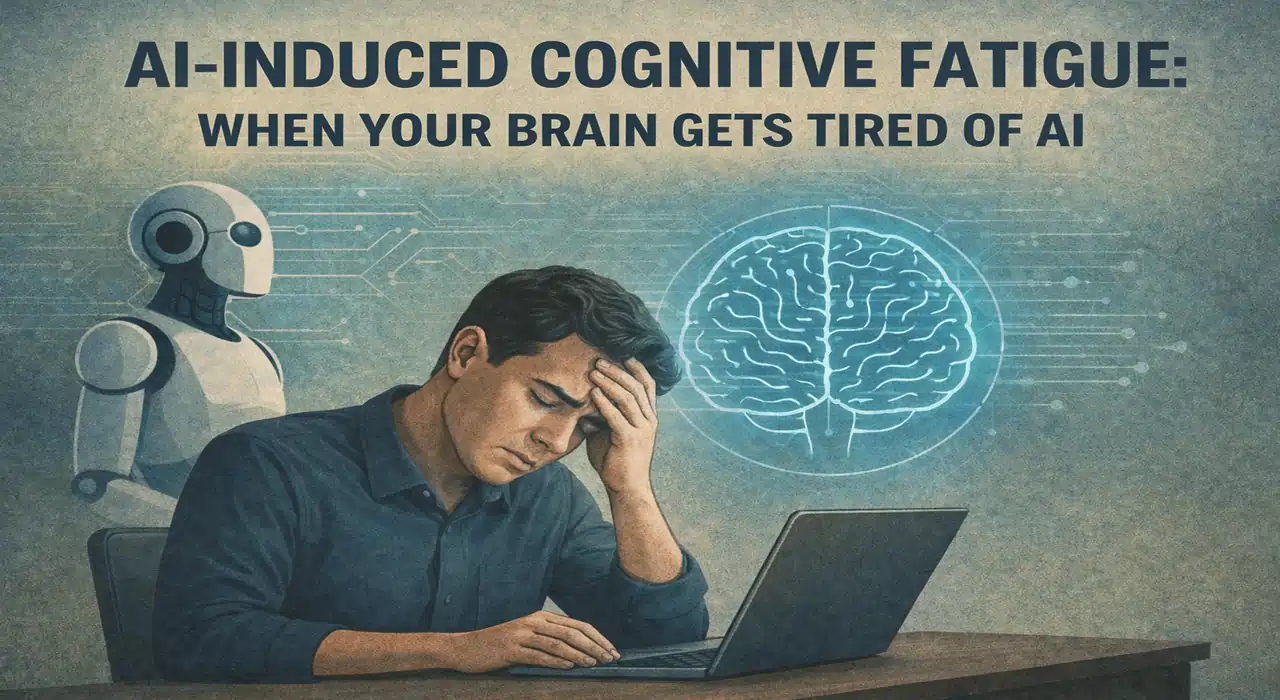
The promise of artificial intelligence was straightforward: handle the drudgery so you can focus on the thinking. In 2026, that promise has curdled into a different reality. You are not using AI to be more productive; you are using it to manage the noise it creates. This is the core of AI fatigue 2026. It is not a rejection of the technology, but an exhaustion from the cognitive overload that comes with trying to steer it.
The phenomenon is often called the productivity paradox. As tools multiply, the clarity of the final output diminishes. You spend more time prompting, editing, and verifying than you did doing the work yourself. The result is a sense of mental clutter that no amount of efficiency software can clear away.
Research into this shift points to specific physiological and psychological costs. Extended use of AI leads to cognitive strain, attention depletion, and information overload. The brain is not designed to constantly switch between human intuition and machine-generated logic. Each switch costs energy. Over a workday, these micro-costs add up to a profound sense of burnout.
Key Insight: Extended AI use leads to cognitive strain and attention depletion, per recent 2026 research.
This is why the hybrid human-AI workflow is becoming the only viable path forward. It is not about letting the machine do the work. It is about defining the work so clearly that the machine can only assist, not dominate. The goal is not more output. The goal is clearer thinking.
Why pure AI feeds fail under scrutiny
The promise of the "AI Feed Oracle" is seductive: a deterministic engine that ingests raw data and spits out finished answers. In 2026, however, this model is breaking down. Users are not just tired of the noise; they are exhausted by the friction of verifying outputs that feel right but lack the structural integrity required for high-stakes decisions. When AI tools operate as black boxes, they strip away the contextual nuance that human experts rely on to spot anomalies.
This is not merely a question of accuracy; it is a question of reliability. Pure AI systems often suffer from nondeterminism, where the same input yields slightly different, sometimes contradictory, outputs. For a finance professional or a strategic planner, this variability is a liability. Without a human-in-the-loop to provide grounding and context, these feeds become sources of confusion rather than clarity. The result is a cycle of double-checking that defeats the purpose of automation.
Consider the volatility of the S&P 500. A pure AI feed might summarize recent trends based on historical patterns, but it often misses the immediate, nuanced shifts in market sentiment driven by real-time events.
The chart above illustrates the kind of real-time movement that requires human interpretation. An automated feed might flag a dip, but it cannot explain the why—the specific geopolitical tension or earnings call detail that triggered the move. This gap between data and understanding is where AI fatigue takes hold. Users feel the weight of having to act as the final editor for every insight, leading to decision paralysis.
To combat this, we must move away from the idea that AI can replace human judgment entirely. Instead, we should view AI as a tool for augmentation, not automation. By keeping humans in the loop, we preserve the contextual understanding that pure AI feeds lack. This hybrid approach reduces fatigue by ensuring that the insights we act on are both data-rich and contextually sound.
Building a hybrid human-AI workflow
The goal isn't to replace your judgment with automation, but to use AI as a drafting partner that handles the heavy lifting while you retain final control. This approach reduces the cognitive load that causes fatigue, allowing you to focus on strategy rather than repetitive editing. By defining clear boundaries for where AI stops and human oversight begins, you create a workflow that is both efficient and authentic.
Identify which parts of your process benefit from speed and which require nuance. Use AI for data gathering, initial drafts, or formatting, but reserve strategic decisions, tone checks, and final approvals for yourself. This prevents the "blank page" problem without surrendering creative control.

Treat AI as a junior assistant who needs clear instructions. Provide detailed context, target audience details, and specific constraints in your prompts. Ask for multiple variations or outlines rather than finished pieces, giving you raw material to work with instead of a rigid final product.

Read every output critically. Check for accuracy, logical flow, and brand voice consistency. AI can hallucinate facts or drift into generic language, so this review step is non-negotiable. Edit the content to ensure it reflects your specific expertise and perspective, not just general knowledge.
Add the final human touch by injecting personal anecdotes, case studies, or unique insights that AI cannot replicate. Ensure the narrative flows naturally and aligns with your broader strategy. This step transforms a competent draft into a compelling piece of work that resonates with your audience.
Implementing this hybrid model requires discipline, but the payoff is a sustainable workflow that leverages technology without sacrificing quality. As consumer skepticism grows, maintaining a human voice becomes a competitive advantage. By keeping humans in the loop, you ensure that your output remains trustworthy and relevant in an increasingly automated landscape.
Tools that support intentional use
The shift toward hybrid workflows isn't about finding a single "magic" platform; it is about curating a stack where each tool serves a distinct, human-led purpose. Instead of automating entire departments, we recommend selecting software that acts as a collaborative partner, keeping the user in the driver's seat while offloading repetitive friction.
Content and Writing Assistants
These tools excel at drafting, editing, and brainstorming, but they require human oversight for tone and accuracy. They are best used for overcoming writer's block or structuring rough ideas rather than generating final publish-ready content.

As an Amazon Associate, we may earn from qualifying purchases.
Project and Task Management
Hybrid workflows thrive on clarity. These platforms help organize the division of labor between human creativity and AI execution. They provide the structure needed to track where AI has contributed and where human judgment is still required.


As an Amazon Associate, we may earn from qualifying purchases.
Design and Visual Creation
Visual tools that allow for iterative refinement are essential for maintaining brand consistency. Look for platforms that let you upload existing assets and use AI to suggest variations or remove backgrounds, rather than generating images from scratch without direction.


As an Amazon Associate, we may earn from qualifying purchases.
No comments yet. Be the first to share your thoughts!